
Picture this. It’s 6 AM, the truck is loaded with trussing, lights, and half a wedding stage, and a GST officer flags it down on the highway because the e-Way Bill rules for event managers’ equipment aren’t right. Now the vehicle is held up, the venue is waiting, and your setup crew is standing around with nothing to do. Most event teams have lived some version of this, or heard about it from someone who has. Whether you’re a wedding planner, event planner, wedding stage decorator, light and sound vendor, production company, or rental business, managing your e-Way Bill and GST compliance is as essential to event logistics as the stage design itself.
The Basics You Need to Know
- The ₹50,000 rule:An e-Way Bill is generally needed when the value of the consignment goes above ₹50,000, subject to conditions and exemptions.
- It’s not just for sales:Moving your own rental equipment counts too. That includes décor, lighting, sound, trussing and furniture going between your warehouse, venues and event locations.
- The right document matters:The correct GST document has to travel with the e-Way Bill, depending on what kind of movement it is.
A quick note: GST and e-Way Bill rules vary by transaction type, goods, registration status, location and exemptions. Before moving high-value equipment, check with a GST practitioner or tax professional.
“It’s Coming Back Anyway” Is a Risky Assumption
A lot of event businesses think, “It’s our own equipment and it’s returning to the warehouse after the event, so we don’t need transit papers.” That’s where trouble often starts. Many vendors overlook e-Way Bill rules for event managers, assuming temporary movements are exempt. However, strictly adhering to e-Way Bill rules for event managers is essential—if an e-Way Bill or other required document applies and it’s missing or incorrect, the movement can be dealt with under GST law.
1. It can get expensive
Non-compliance can lead to tax and penalty consequences. Depending on the situation, goods and vehicles can also be detained.
2. Your goods and vehicle can be held up
Under the relevant CGST Act provisions, goods and the vehicle carrying them may be detained. When your equipment has to reach a venue at a fixed time, even a short hold-up hurts.
3. Your whole setup can fall behind
A delay in stage materials, lighting, sound, trussing, furniture or décor can push back the entire production. For weddings, corporate events and exhibitions, a few lost hours can mean:
- Late stage installation
- Extra labour costs
- Clashes with the venue’s schedule
- Delayed sound and lighting setup
- Last-minute transport arrangements
- An unhappy client
That’s why documentation belongs on your event production checklist, not at the bottom of the to-do list.
It’s Not Only About Avoiding Penalties
Good paperwork also makes your day-to-day operations smoother:
| Area | How proper documentation helps |
| Transit checks | Complete, accurate papers can reduce avoidable delays during inspections. |
| Transport planning | Your team can track and coordinate equipment movement more easily. |
| Vendor and client confidence | Clean records show you run an organized, compliant operation. |
| Equipment tracking | Delivery challans help show what went to which venue. |
| Return logistics | Records for return trips give you a clear trail when equipment comes back. |
How to Handle E-Way Bills for Event Equipment
The right paperwork depends on the type of movement, so don’t assume one approach fits every trip.
Sending rental equipment to the venue
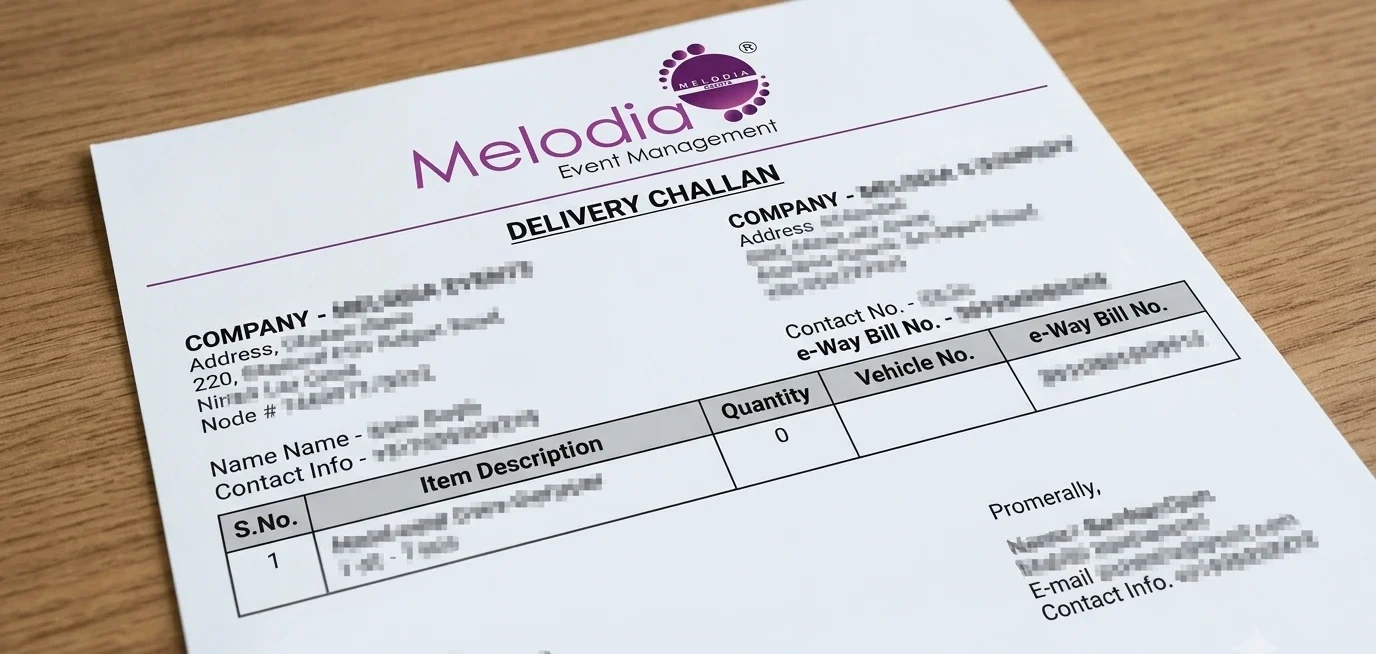
For sound systems, lights, Special Effects , props, trussing, furniture and other rental assets, a Delivery Challan may support the movement where applicable. The document type and reason for transport should match what’s actually happening. The e-Way Bill system offers reasons like “Exhibition or fairs” and “For own use”, among others. Pick the one that honestly fits your situation.
Bringing it back after the event
Once the event is over, the equipment has to go back to the warehouse, and the return trip needs the right documents too, with an e-Way Bill where one is required. Before anything leaves the venue, have your operations team check:
- The relevant document
- Whether an e-Way Bill is required
- Vehicle details
- Consignment details
- E-Way Bill validity, where applicable
This matters most after big events, when expensive production equipment is heading home.
Using more than one vehicle
Big productions often need several trucks or smaller commercial vehicles. When a consignment is split up, the documents and vehicle details must match the goods in each vehicle. Where applicable, update the vehicle details in the e-Way Bill system. Consolidated e-Way Bill provisions may help when several consignments travel in one vehicle.
The principle is simple: your papers should reflect what’s on the vehicle and which vehicle it is.
Pre-Dispatch Checklist for Your Production Team
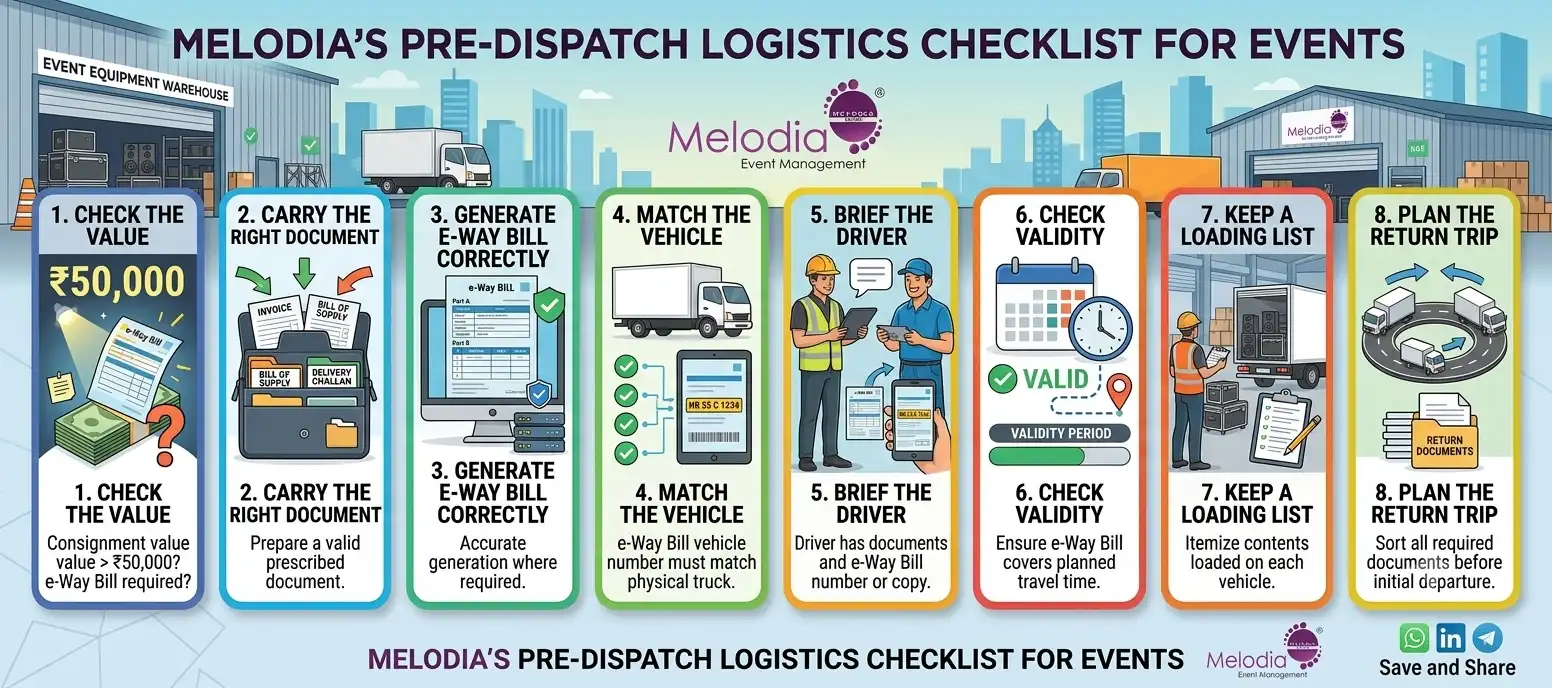
Before equipment leaves for an event or wedding venue, run through this:
- Check the value.Does the consignment cross ₹50,000, and is an e-Way Bill needed?
- Carry the right document.That could be an invoice, bill of supply, delivery challan or another prescribed document.
- Generate the e-Way Bill correctlywherever it’s required.
- Match the vehicle.The vehicle number in the e-Way Bill should be the one actually carrying the goods.
- Brief the driver.They should have the required documents and the e-Way Bill number or an electronic copy.
- Check validity.Make sure the e-Way Bill covers the planned travel time.
- Keep a loading list.Note what’s on each vehicle.
- Plan the return trip.Sort out the documents before the equipment leaves the venue.
Make GST Paperwork Part of Your Dispatch Routine
Transport is part of the event itself. You can’t finish a stage without the materials, test the lighting without the lights, or install sound without the equipment on site. So a paperwork problem on the road quickly becomes a production problem at the venue.
When e-Way Bill and GST checks are a standard step before every dispatch, your team can:
- Avoid unnecessary transit delays
- Keep better equipment records
- Coordinate transport more smoothly
- Reduce compliance risks
- Keep the warehouse and event management teams in sync
- Protect your client testimonials
Final thought: Whether it is traditional events or Gen Z events, every event starts on the road. Build e-Way Bill compliance into your regular workflow, and you protect your equipment, keep your vendors happy, and let your team focus on creating the experience instead of fighting paperwork.
Disclaimer: “GST and e-Way Bill requirements can vary depending on the nature of the movement, goods, location, and applicable exemptions. Please verify the current requirements with a qualified GST professional.”
Do I need an e-Way Bill for rental equipment that’s coming back after the event?
Possibly. If the conditions under GST rules are met, a temporary or rental movement isn’t automatically exempt, even if the goods are expected back at the warehouse. Where applicable, a Delivery Challan can be the supporting document. The exact paperwork depends on the nature of the movement.
What if the equipment goes in multiple vehicles?
The documents and vehicle details should match the goods in each vehicle. Make sure e-Way Bill requirements are met for each movement, and enter or update vehicle details wherever required.
Do I need an e-Way Bill when bringing equipment back from the venue?
If the return movement meets the conditions for generating one, arrange the e-Way Bill and supporting documents before the equipment leaves the venue. They should reflect the real nature of the return movement.
Can the driver show the e-Way Bill on a smartphone?
Generally, yes. The person in charge of the vehicle can usually show the e-Way Bill number or the relevant electronic documents during inspection, so a printout isn’t always necessary. The driver should still carry the other documents for that movement, such as the invoice or Delivery Challan.
Does the e-Way Bill apply only when goods are sold?
No. It can apply to certain movements that aren’t sales, such as moving equipment for exhibitions, events, own use, repairs, demonstrations or rentals.