LED technology for events means LED display systems used for stage backdrops, dance floors, entrances and outdoor setups. For Kerala weddings and corporate events, the most-used displays are video walls, curved screens, pillars, ribbons, floors, mesh, outdoor panels and totems. The right choice depends on venue size, viewing distance, lighting, content and installation safety, and in Kerala, on the weather.
Melodia Event Management has more than 15 years of experience, including outdoor and coastal events. This guide draws on that experience.
At a Glance
| Display type | Best for | Key consideration |
|---|---|---|
| LED video wall | Wedding stages, conferences, launches | Size vs viewing distance |
| Curved LED | Wedding stages, launches | Curvature, viewing angle, content layout |
| LED pillars | Stage sides, depth effect | Must not block sightlines or guest movement |
| LED ribbon | Stage edges, branding | Continuous content design |
| LED floor | Dance floors, themed shows | Load capacity, slip resistance |
| LED mesh | Large outdoor stages, facades | Wind loading, resolution |
| Outdoor LED | Outdoor and coastal weddings, concerts | Brightness, IP rating, wind, power |
| LED totem | Entrances, registration | Guest circulation |
The LED Displays Used Most at Events – LED technology for events
1. LED Video Walls
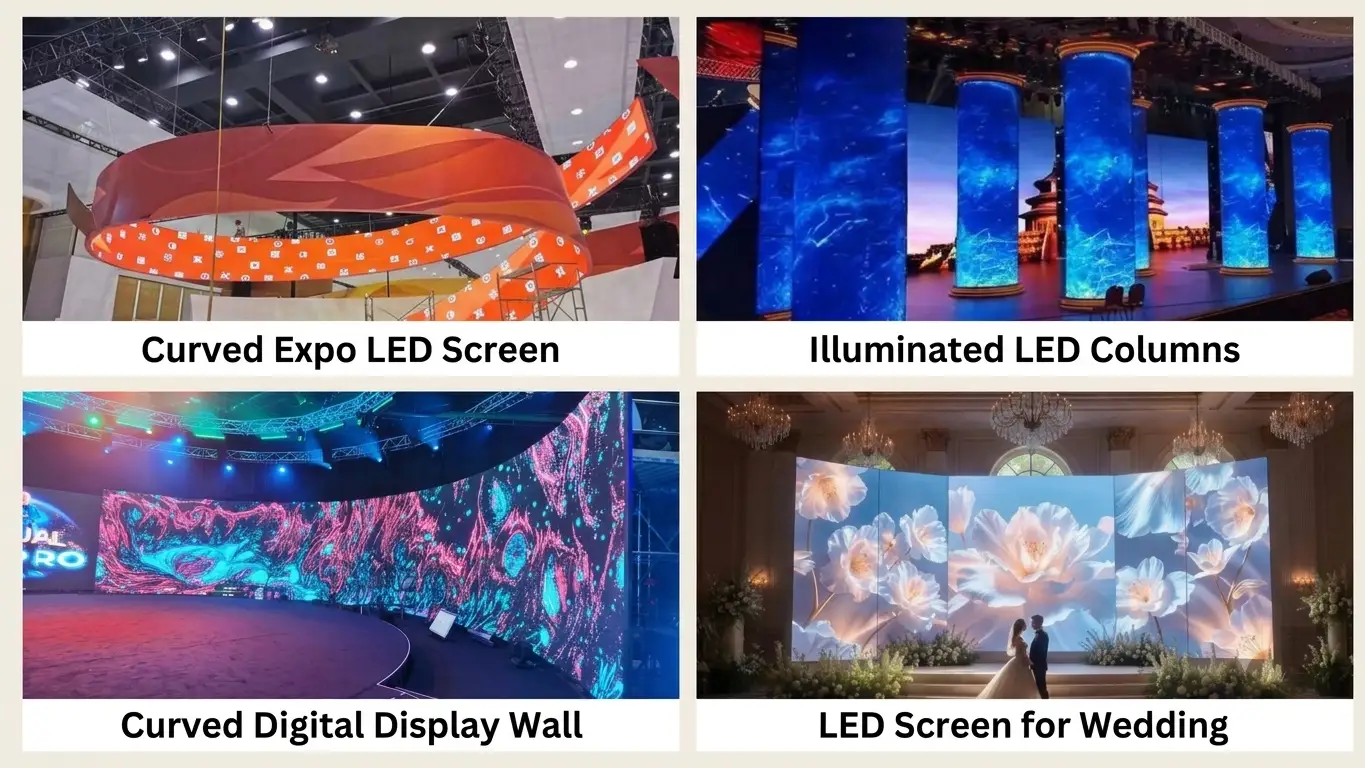
Several panels joined into one large screen, the most common choice for wedding stages, conferences and launches. Choose size by audience viewing distance and venue layout, not by screen size alone.
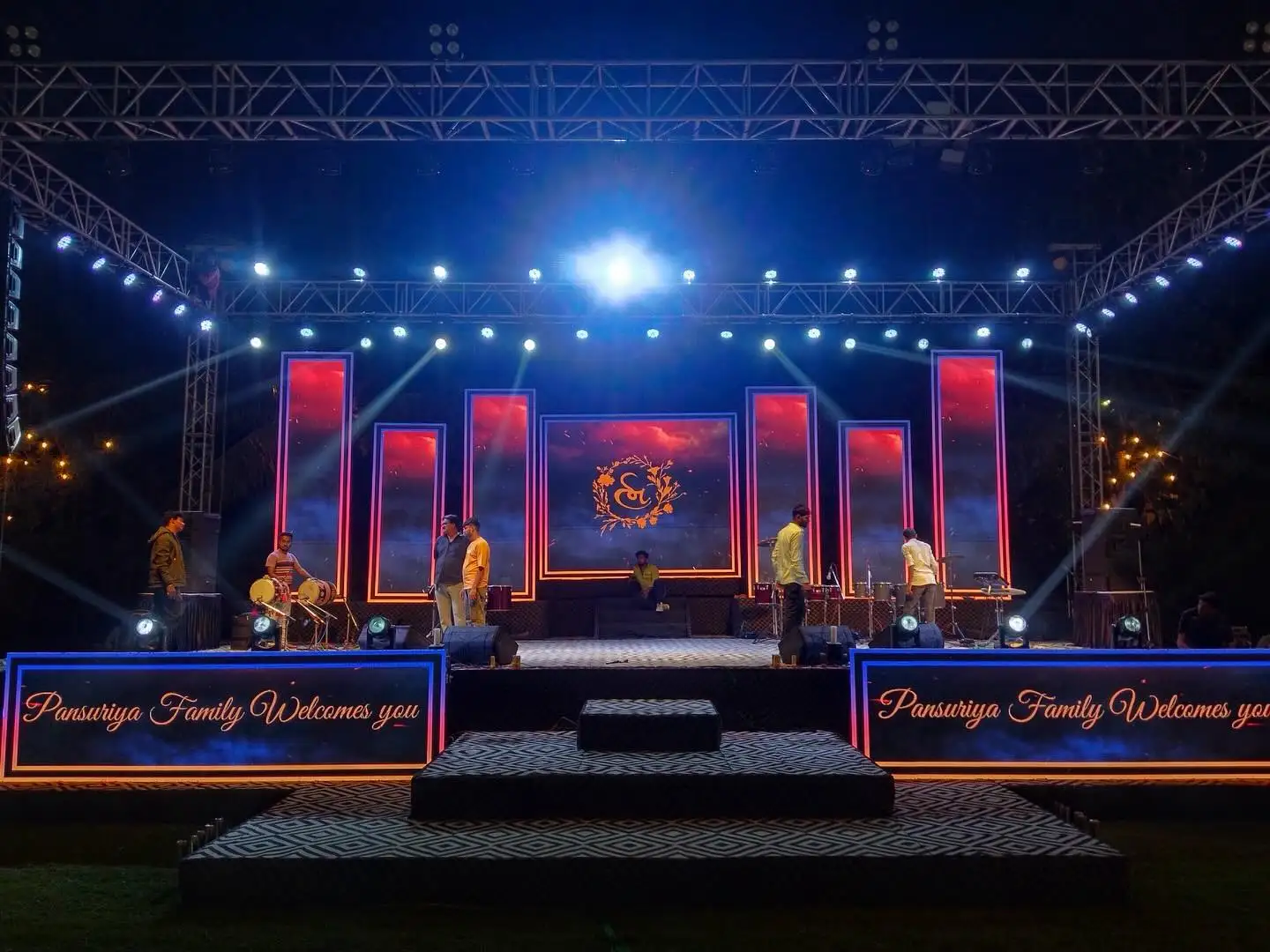
LED backdrops work best when they are planned alongside the stage layout and lighting. See how Melodia incorporated LED backdrops and neon lighting into an indoor event at Silver Cloud Resort in Thrissur.
LED video walls are widely used as wedding stage backdrops to display visuals that complement the event’s theme. See the LED wall in action in Devaki and Adeesh’s wedding reel, managed by Melodia Event Management.
2. Curved LED Displays
Curved screens follow the shape of the stage design instead of sitting flat behind it. Plan the curve, resolution, viewing angle and content layout before installation. Flexible LED modules can create similar shapes, but not every panel is flexible, so check the manufacturer’s specifications.
3. LED Pillars
Vertical screens at the sides of the stage carry one theme across several surfaces and add depth. Make sure they do not block guests’ view or movement.
4. LED Ribbon Displays
Long, narrow screens along stage edges or structures show continuous graphics and branding. They tie different parts of the stage into one visual theme.
5. LED Floors
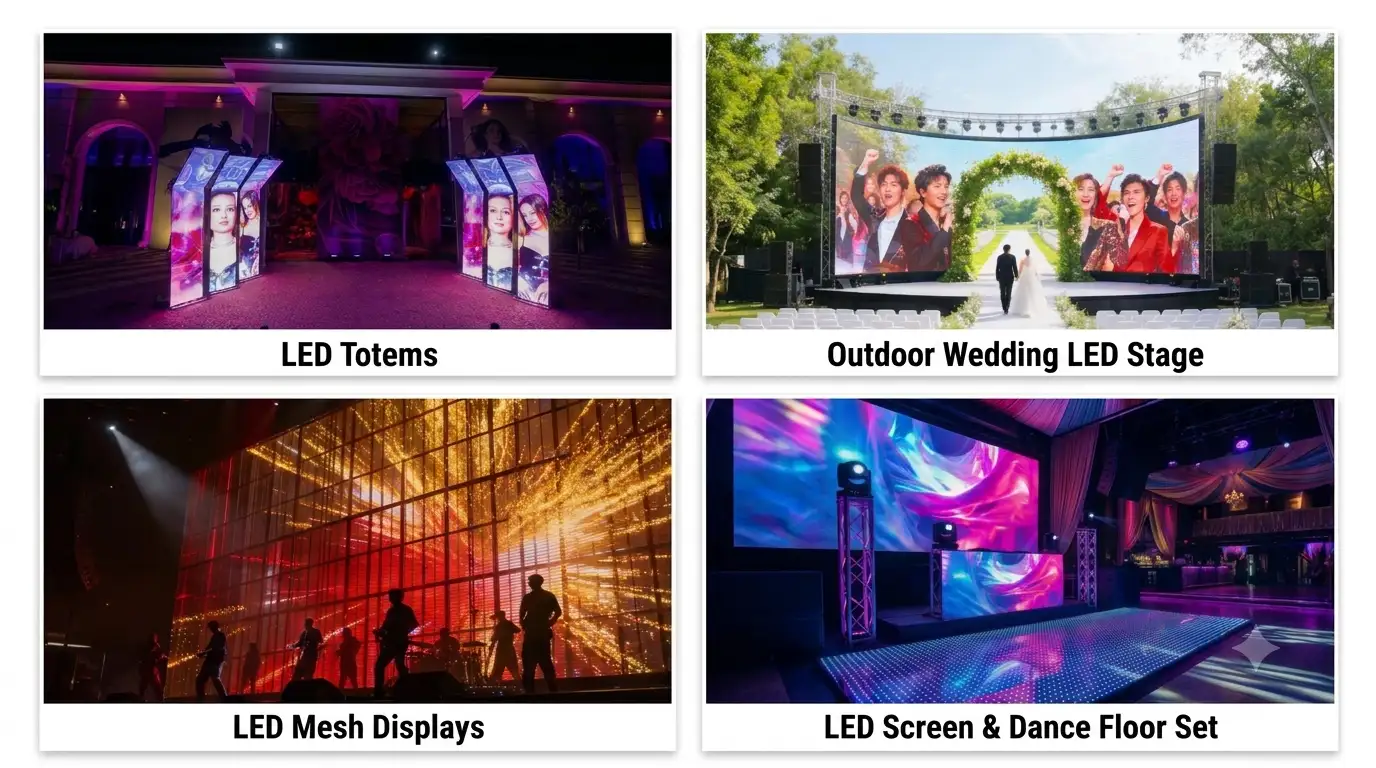
The floor can show moving visuals and patterns for dance floors and themed events. Use purpose-built floor systems only; check load capacity, slip resistance and cable routing.
6. LED Mesh Displays
An open structure lets light and view pass through, so mesh is lighter than solid screens and suits large outdoor stages and facades. Brightness and resolution vary by model, and wind loading needs careful evaluation outdoors.
7. Outdoor LED Displays
Built for outdoor light and weather, for outdoor weddings, concerts and open-air functions. Confirm the real IP rating, brightness, structural support and power safety.
8. LED Totems
Tall vertical screens for entrances and registration areas show welcome messages, schedules and directions. Place them so they do not obstruct guest circulation.
Other formats. Transparent LED, LED cubes, interactive screens, ceiling displays and holographic fans are mainly used at exhibitions and large productions, so they are not covered in detail here. Note that holographic LED fans are not true holograms; they create the effect with spinning LED blades.
Using LED at Weddings and Corporate Events
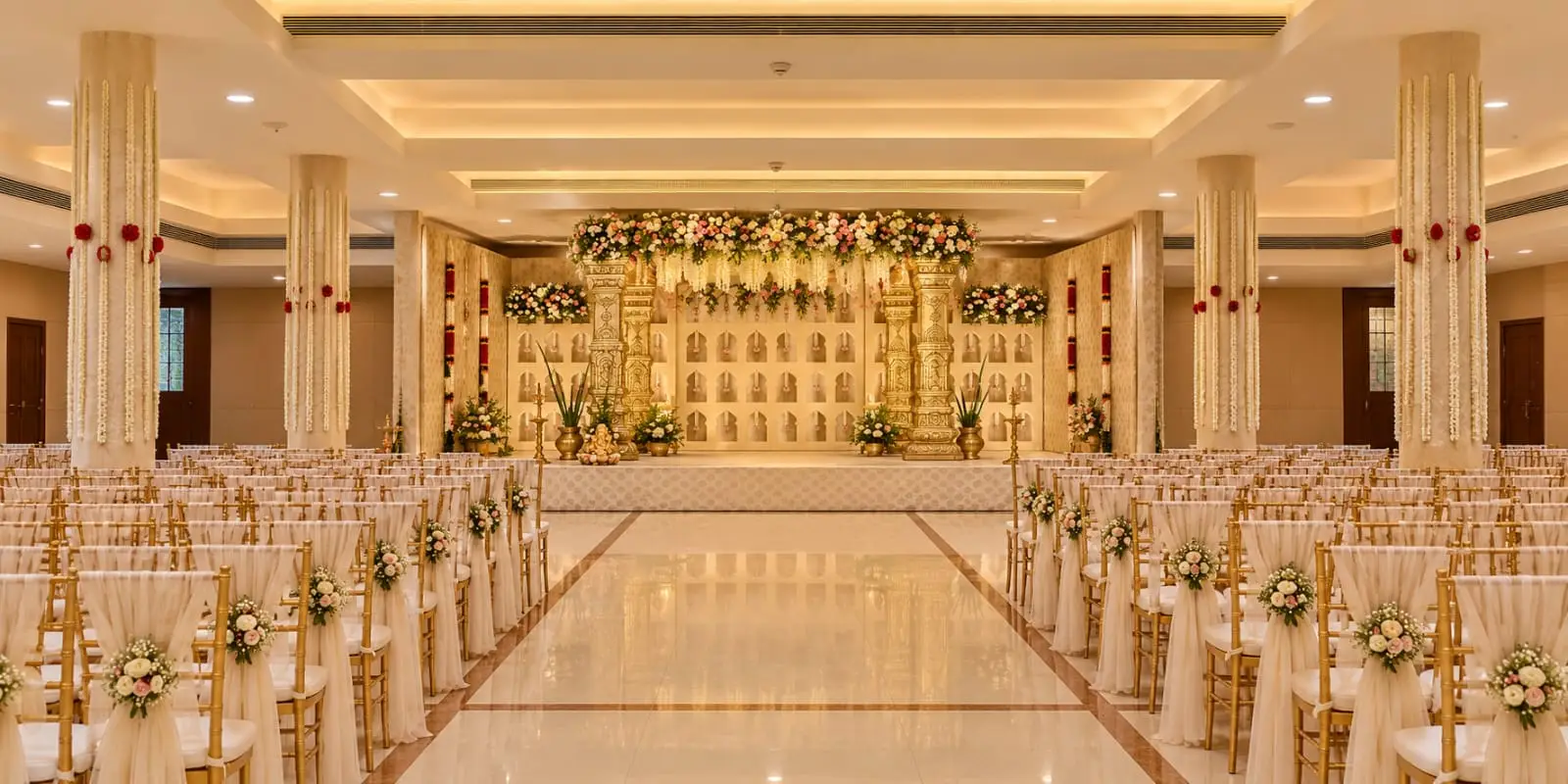
At weddings, LED can show couple names, photographs, animations and themed backgrounds that blend with floral decor and lighting. Keep brightness and placement comfortable for the couple and photographers, with no glare or reflections on faces. At corporate events, readable text matters most: use large type and strong contrast so the back rows can read it, and plan live feeds and brand visuals around the screen’s resolution.
For weddings, the display should complement the stage design, décor and guest experience. Learn more about Event and wedding planning in Kerala.
LED in Kerala Venues: Monsoon, Coastal and Temple-Style Stages
- Monsoon and humidity: Check that outdoor displays have a real IP rating (for example IP65) and verify it in the manufacturer’s specifications. Prepare rain covers, cable protection and a rain Plan B in advance.
- Coastal venues: Wind and salt-laden air. Calculate wind loading for mesh and outdoor screens, and ask about corrosion protection for metal parts.
- Outdoor LED setup and venue suitability: Before confirming an outdoor LED setup, assess the available space, stage dimensions, guest circulation and weather exposure. A venue checklist can help identify practical requirements before finalising the setup. Read our guide to choosing a wedding venue in Kerala for more considerations when evaluating a venue.
- Temple-style decor: LED can be added without breaking the look of a traditional stage, using local-themed content such as the nilavilakku, flowers and Kerala mural motifs. For some venues, confirm in advance that LED is permitted.
- Auditoriums and convention centres: Check ceiling height, rigging points, power capacity and load-in time.
- Power: Generator or UPS backup and proper earthing keep the display on if mains power fails.
This is where Melodia’s more than 15 years of experience at outdoor and coastal venues across Kerala helps.
Choosing an LED Display: Technical Checklist
Pixel Pitch and Viewing Distance
Pixel pitch (in mm) is the distance between neighbouring pixels. A smaller pitch gives a sharper image up close but costs more. A common rule of thumb: minimum viewing distance in metres is roughly the pixel pitch in mm, so P3.9 works from about 4 metres.
| Pixel pitch | Approx. minimum viewing distance | Typical use |
|---|---|---|
| P2.6 | ~2.6 m | Indoor wedding stages, small halls |
| P3.9 | ~4 m | Indoor/outdoor stages, mid-size events |
| P4.8 | ~5 m | Large halls, outdoor stages |
| P6.25 | ~6 m+ | Large outdoor events, distant audiences |
General industry guidelines only; they vary by manufacturer, model and content. Check the spec sheet before confirming.
Other Checks
- Brightness: Too bright indoors is uncomfortable; outdoors in daylight you need more. Choose adjustable brightness.
- Refresh rate: Matters for live cameras and photography. Camera-friendly panels are often quoted at 1920Hz or 3840Hz and above, but check the model and run a camera test to catch flicker and banding.
- Content mapping: Content must match the screen’s resolution, shape and aspect ratio, or images stretch or crop. Test curved screens, pillars and mixed panels in advance.
- Installation and safety: Check mounting, support structure, power distribution, cable management, ventilation and weather protection. Suspended or moving screens need structural engineering and professional rigging. LED installation also needs to be coordinated with stage construction, lighting, sound, electrical requirements and venue operations. See Melodia’s event execution experience at Chakolas Pavilion for an example of technical coordination at a wedding venue.
What Does an LED Wall Cost?
Many people search for “LED wall cost for wedding in Kerala”. No single figure fits every event, because cost depends on:
- Screen size (square feet) and pixel pitch
- Indoor or outdoor panels
- Rental duration and number of event days
- Structure, rigging and installation
- Content creation and motion graphics
- Technician and operator
- Power and generator backup
- Transport, setup time and venue restrictions
A good LED setup comes from matching display type, pixel pitch, content and installation safety to the venue, and in Kerala, to the weather. Technology alone is not enough; it works when it fits the stage and the event.
❓Frequently Asked Questions
What is LED technology for events?
LED technology for events means LED display systems used to present stage backgrounds, presentations, brand visuals and themed displays. At Kerala weddings and corporate events, the most common formats are video walls, curved screens, pillars, ribbons, floors, mesh, outdoor panels and totems.
How do I choose the right LED screen for an event?
Check the event type, venue dimensions, audience viewing distance, pixel pitch, brightness, content requirements, installation restrictions and budget. A screen that suits a small hall with a close audience may not suit a large venue.
Which pixel pitch is best for a wedding stage?
For a typical indoor wedding stage, P2.6 to P3.9 is often considered. The right choice depends on guest viewing distance, screen size and budget, so check the manufacturer’s specifications before confirming.
Can LED displays be used for outdoor events in Kerala?
Yes, if they are designed for outdoor use. Confirm the IP rating, structural support and power safety before installation, and plan for rain, humidity, wind and coastal salt air, especially during the monsoon season.
How much does an LED wall cost for a wedding in Kerala?
The cost depends on screen size, pixel pitch, indoor or outdoor use, rental days, structure and installation, content creation, power backup and transport. Contact Melodia Event Management for a quote based on your venue and stage plan.