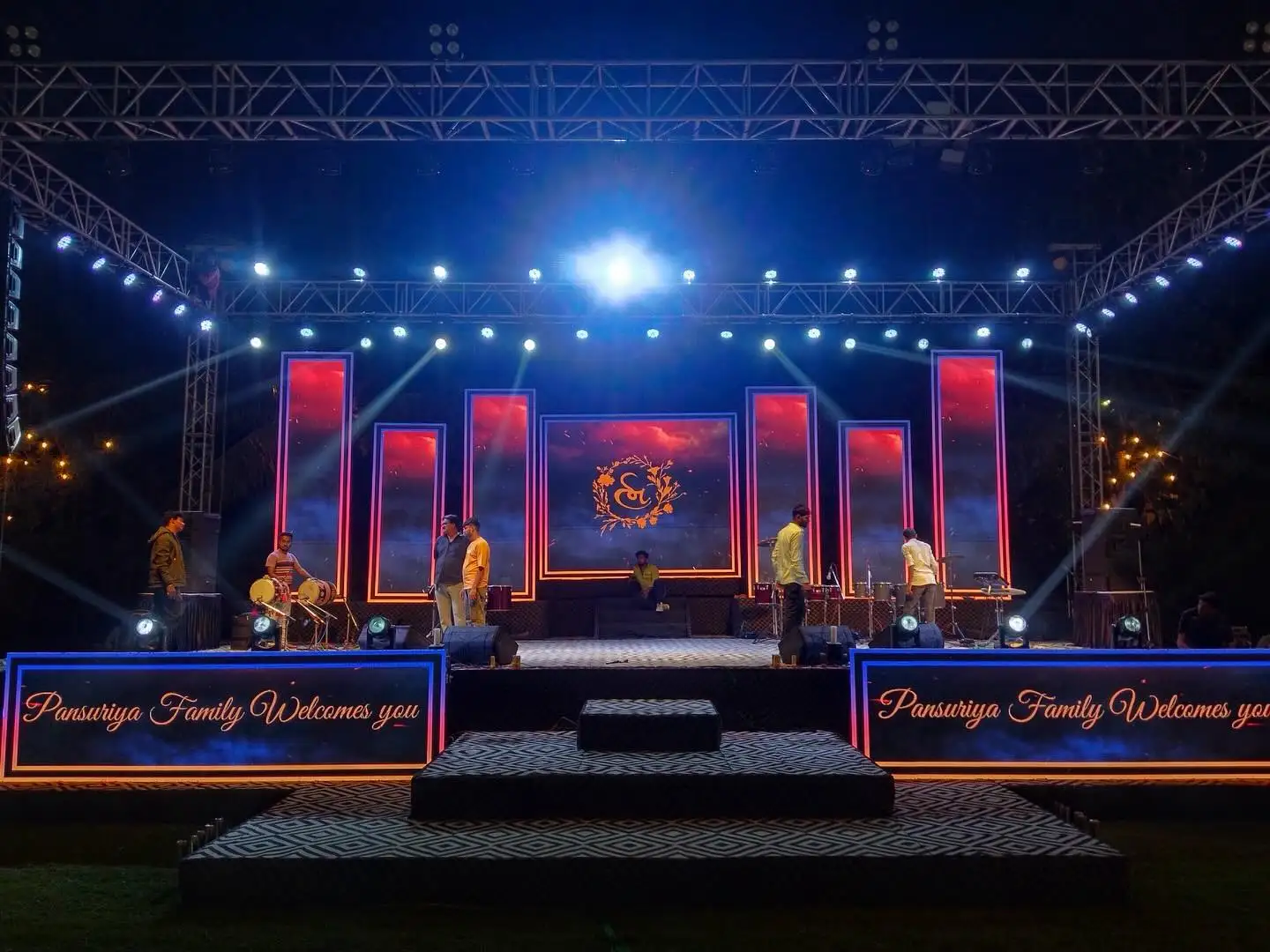
Events in our part of the world rarely last just a day. A Mehendi, a Sangeet, Haldi, the wedding itself, and a reception can stretch across several days, with thousands of guests, lakhs spent on stage, lighting, sound, and décor, and the monsoon always lurking in the background. With that much riding on one event, what happens if something goes wrong? Who takes the loss?
Event insurance is still something many people in India have never heard of. But as the event industry grows, it’s becoming harder to ignore.
What Is Event Insurance?
Event insurance is a policy that protects organizers and hosts from financial losses caused by unexpected incidents, whether they happen before or during the event. When it’s taken for a wedding, it’s often called “wedding insurance,” but it’s really just event insurance designed around a wedding.
Two Covers You Shouldn’t Skip
Public Liability Insurance
Whether your event is private or public, and whatever kind of gathering it is, this cover protects the guests and visitors you’ve invited. It can help if:
- A guest is injured in an accident at the event venue
- Someone else’s property is damaged
- A guest falls ill from the food served (some policies include this, so check yours)
With Indian weddings and festival events often drawing thousands of people, this one matters a great deal.
Fire Insurance
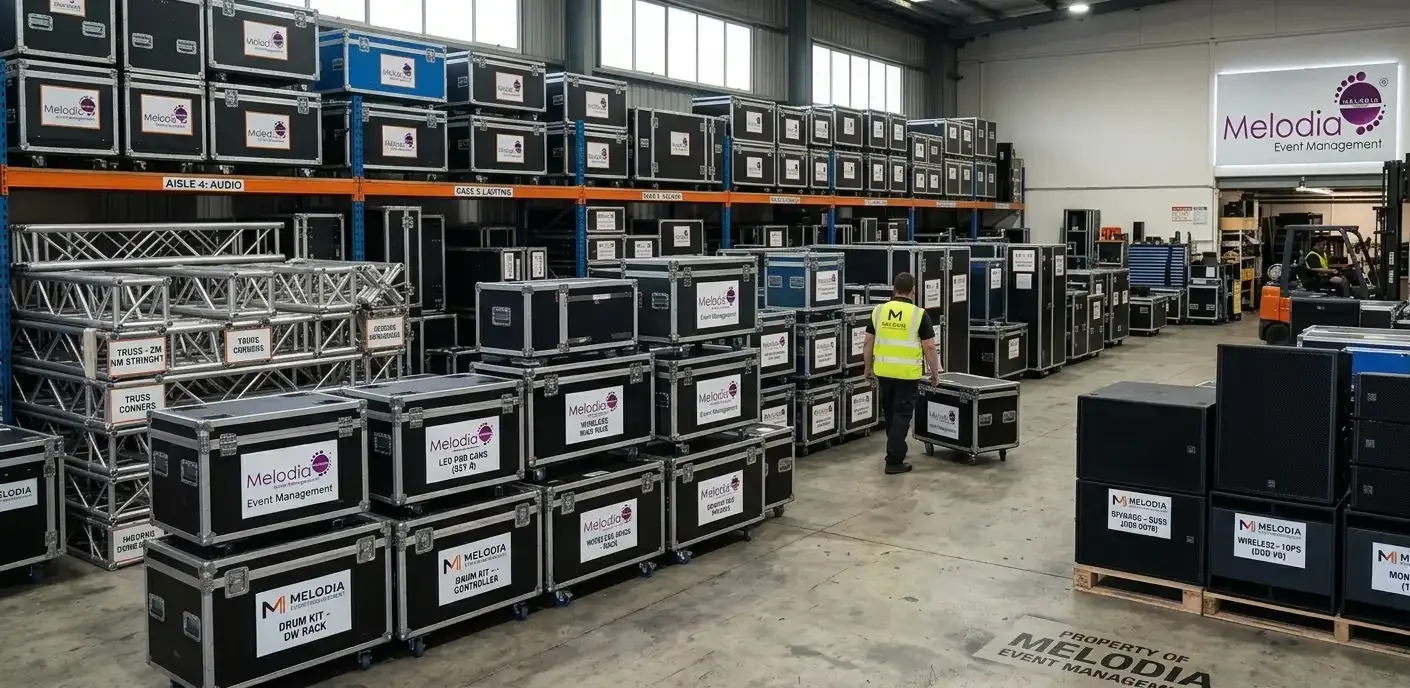
This protects the event team’s infrastructure, and the venue’s, if a fire or a similar accident strikes. Think stages, trusses, LED walls, sound systems and décor. When so much money is tied up in a setup, fire cover isn’t optional.
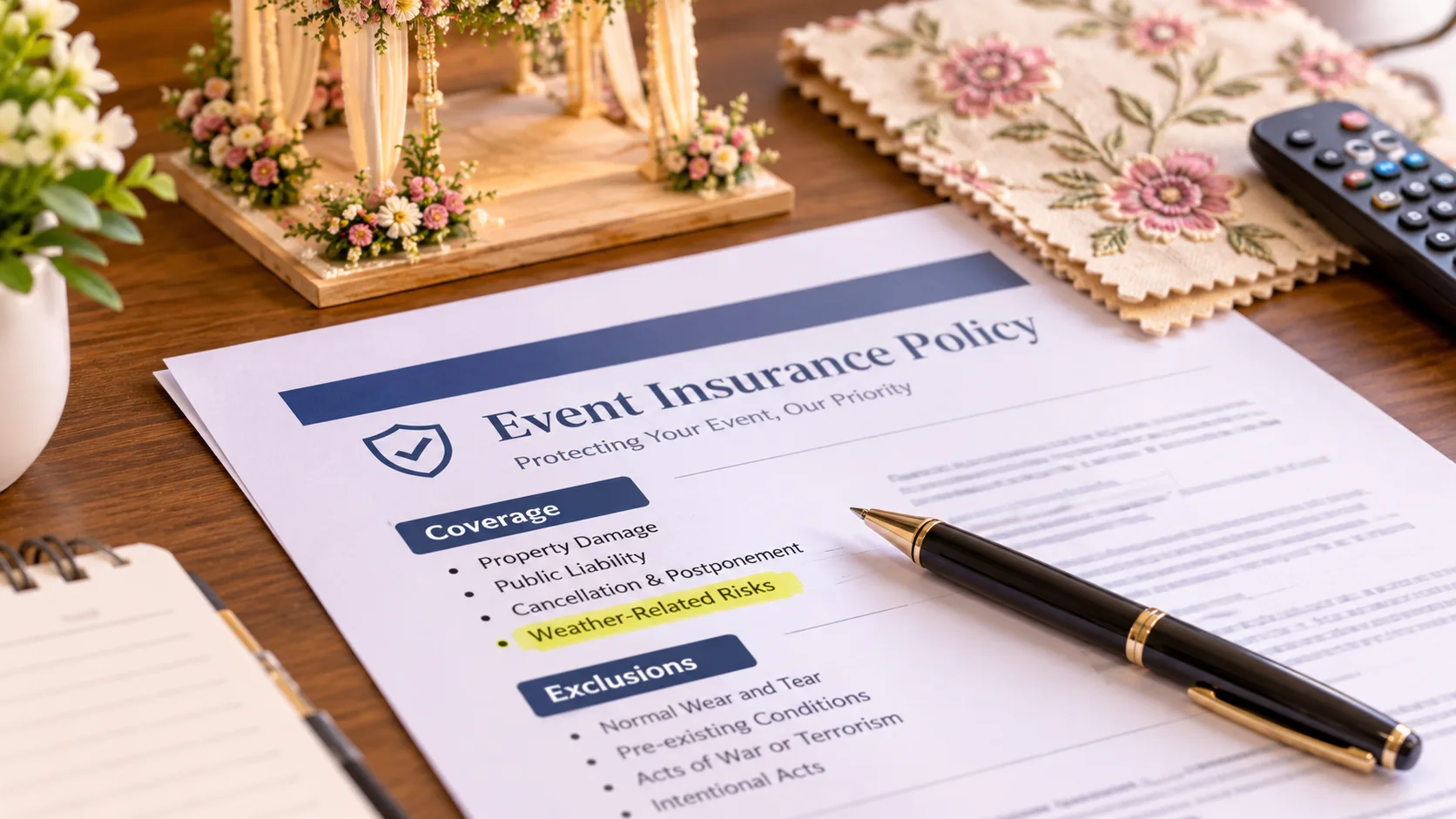
What a Typical Policy Covers
Policies available in India usually include some of the following, though the details depend on the company and the plan:
- Event cancellation or postponement: Compensation for non-refundable costs if the event has to be cancelled or rescheduled for a reason listed in the policy.
- Material damage or set protection: Cover for loss or damage to the venue, stage, décor and other event property.
- Public liability: Cover for injury or loss suffered by a third party.
- Personal accident: Cover for named individuals, such as the bride and groom, if they’re injured.
- Add-ons: Theft, cash, liquor liability and more.
When Should You Buy It?
The best time is right when planning begins. Take the policy when you book the venue and start paying advances to vendors.
- Your risk starts the moment your money goes in. If you buy cover just before the event, the earlier stages may go unprotected.
- If you already know about a possible problem (a bad weather warning, say), it may not be covered. Insurers generally exclude risks that are already known.
- Buying after the event makes no sense, because a loss that has already happened can’t be insured.
In short: decide on insurance before you hand over the first advance, or at the latest when you do.
The Premium: Small Cost, Big Protection
Compared with the total event budget, the premium is usually a small slice. The exact figure depends on:
- The type and size of the event
- The number of guests
- The location
- The covers you choose and the limits you set
When you’ve put lakhs into an event, the cost of one accident can dwarf the premium. So get quotes from two or three insurers early in the planning stage and compare them
Things to Keep in Mind in the Indian Context
- It’s not an off-the-shelf product. Event and wedding insurance isn’t always as easy to buy as clicking a button in an app. You may need to go through your event planner, an insurance broker, or approach the insurer directly.
- Cover is tailored to the event. The premium depends on the covers you pick and the size of the event. At the moment, bigger-budget events are the ones taking it up most.
- Not every reason is covered. If the hosts simply decide to call off the event, that usually isn’t covered. The reason for cancellation has to be one the policy lists, so read the inclusions and exclusions carefully.
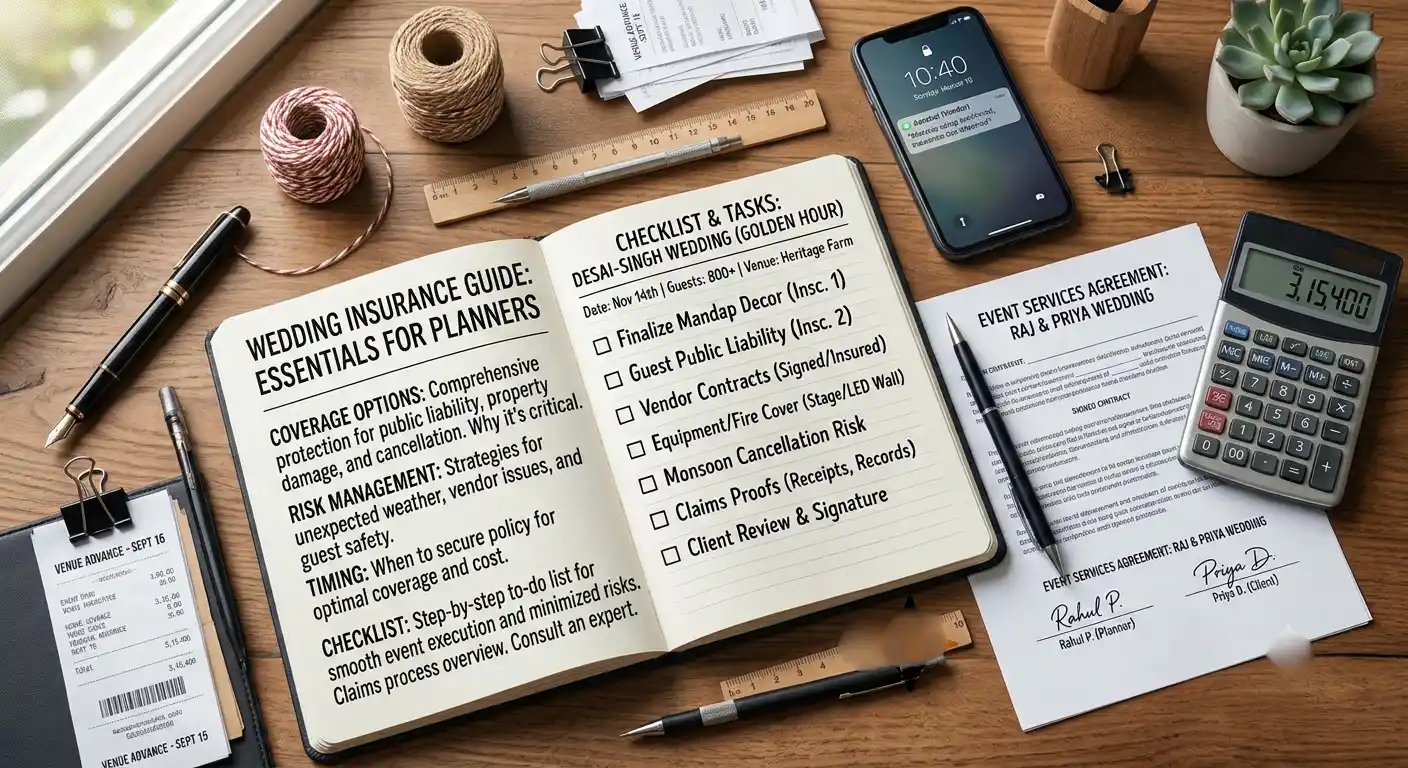
- Keep your paperwork. Hold on to bills, booking receipts, proof of advance payments, quotations and contracts. You’ll need them if you ever make a claim.
- Ask what the venue requires. Some venues ask for insurance at the time of booking. Raise it at the very start of planning.
- Check your vendors’ insurance. Ask your décor, sound, lighting, catering , music and entertainment vendors whether they carry their own cover. If their equipment is damaged, their policy should pay for it.
- Mind the Kerala monsoon. Outdoor events carry more weather risk during the rains. Ask specifically whether weather-related cancellation is covered.
A Quick Checklist
- Is there a large financial investment in the event?
- Are many guests attending?
- Is there expensive stage, lighting, sound or décor equipment?
- Is it an outdoor event, or during the monsoon?
- Does the venue ask for insurance?
- Are there advances you can’t get back?
If you answered “yes” to more than one of these, it’s time to take insurance seriously.
Final Thoughts
Public liability insurance protects your guests. Fire insurance protects your infrastructure and the venue’s. Cancellation and similar covers protect the money you’ve put in. For a modest premium, you can run your event with far more peace of mind.
When you plan your next event, don’t treat insurance as an optional extra. Make it part of the plan. And before you buy, talk to an insurance expert or broker to make sure the cover fits your event.
Planning an event in Kerala? Our team can help you plan every detail, from the venue to the vendors. Talk to Melodia Event Management or explore more in our planning guides.
❓FAQ
What is event insurance?
Event insurance is a policy that protects hosts and organisers from financial loss caused by unexpected incidents before or during an event. Depending on the plan, it can cover cancellation, damage to property, injury to guests and other risks.
Is event insurance the same as wedding insurance?
Wedding insurance is event insurance designed for weddings. The covers are similar: cancellation, damage to décor and property, public liability and personal accident. The terms and exclusions vary by insurer, so always read the policy document.
What does public liability insurance cover at an event?
It covers claims from third parties, such as a guest injured at the venue or someone’s property being damaged. Some policies also include illnesses from food served at the event. Coverage differs between insurers, so confirm this before buying.
What does fire insurance cover for an event?
It protects the event team’s infrastructure and venue-related infrastructure against fire. This can include stages, trusses, LED walls, sound systems and décor, depending on the policy.
What does event cancellation insurance cover?
It compensates you for non-refundable costs if the event is cancelled or postponed for a reason listed in the policy. Common examples are severe weather or illness, but the covered reasons depend on the plan. Voluntarily calling off an event is generally not covered.
When should I buy event insurance?
As early as possible, ideally when you book the venue or pay the first advance. Your financial risk begins when money goes out, and insurers usually exclude risks that are already known, such as a weather warning issued before you buy.
How much does event insurance cost?
There is no single price. The premium depends on the event type and size, the number of guests, the location and the covers and limits you choose. Get quotes from two or three insurers and compare them.
Is event insurance available in India?
Yes, event and wedding insurance is offered by some general insurers in India. It is often arranged through an insurer, broker or event planner rather than bought instantly online, and it is tailored to each event.
Do venues require event insurance?
Some do. Certain venues ask for insurance, often public liability, at the time of booking. Ask your venue about its requirements at the start of planning.
Does event insurance cover rain or bad weather?
Only if the policy includes weather-related cancellation or a weather add-on. This matters for outdoor events during the monsoon, so ask the insurer specifically about it.