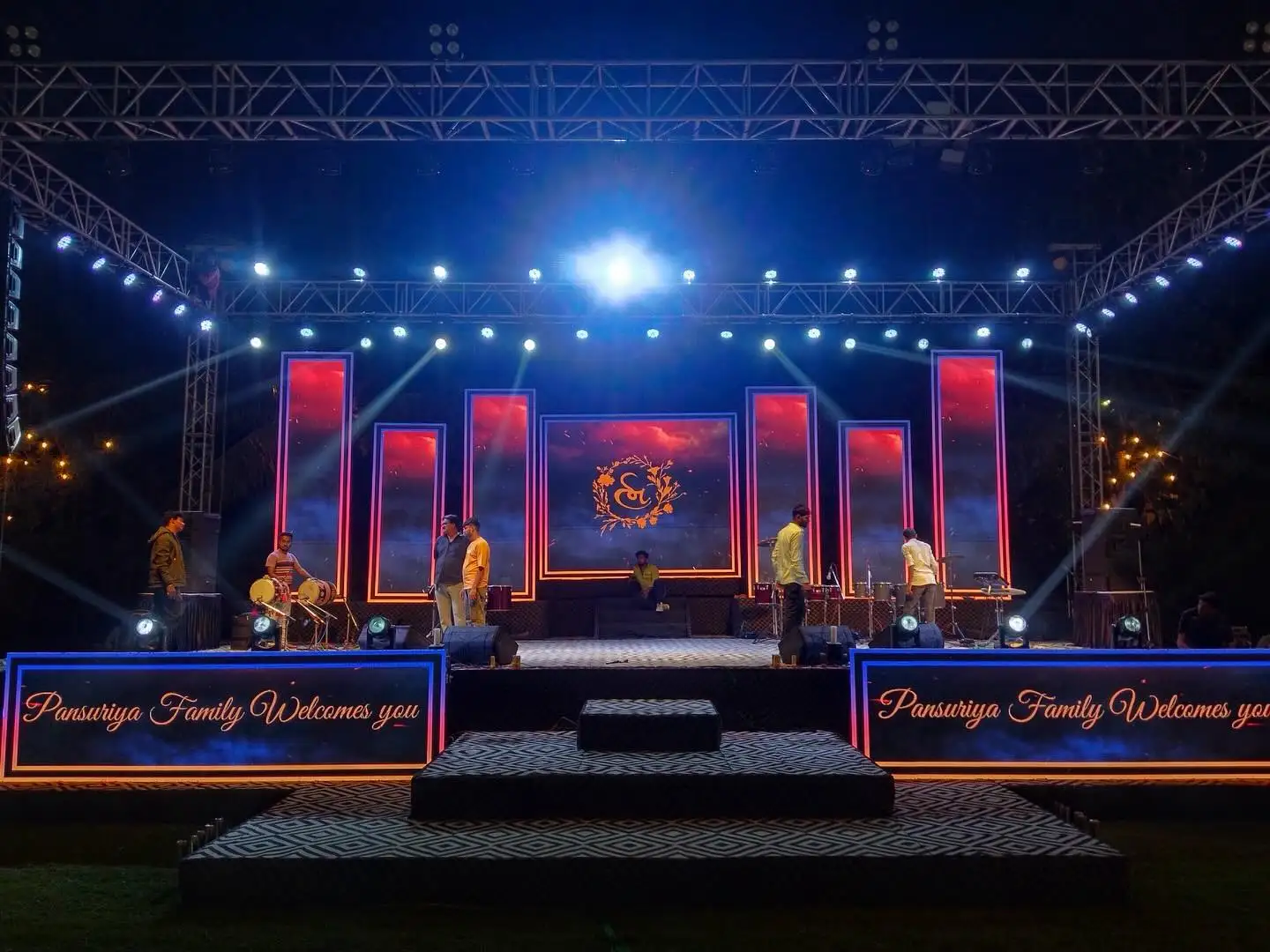

The decor is down, the venue is empty, and the client has left with a happy smile. This is the moment most of us want to relax. But a beautifully executed event doesn’t mean the event management team’s work is done.
What you do after an event is what makes the next one better. It’s also the only way to find out whether the money spent delivered a real return (ROI), and to show your client the value of your work. That’s what post-event analysis and post-event reporting are for.
This guide has two parts: the four things to do right after the event, and seven steps to build a professional report. Each section comes with practical tips you can use straight away.
Part 1: Four Things to Do Right After the Event
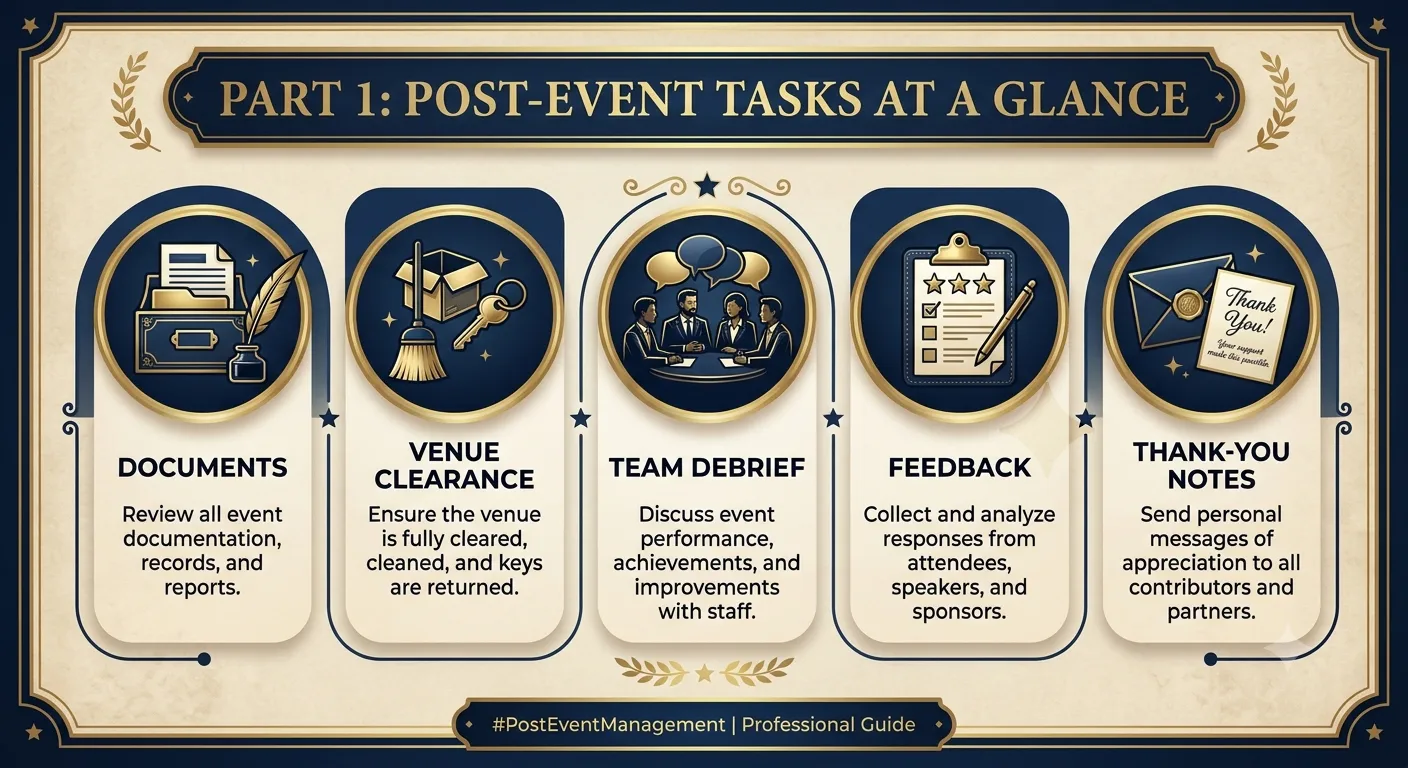
Document Everything (Supporting Documentation)
The analysis you do today will be a big help the next time you handle a similar event. If you have a record of what happened, what went wrong and what data you collected, it becomes a clear roadmap for future projects.
Tips:
- Write your notes within 48 hours of the event. After a week, many details are already forgotten.
- Use the same folder structure for every event: contracts, budget, photos, vendor details, feedback. Anyone on the team should be able to find things quickly.
- Keep vendor contacts and their rates together. It makes a professional event quotation next time much easier.
- Maintain a short “Don’t do this next time” list. It’s the simplest way to stop the same mistakes from repeating.
Clear and Hand Over the Venue (Site Cleanup & Clearance)
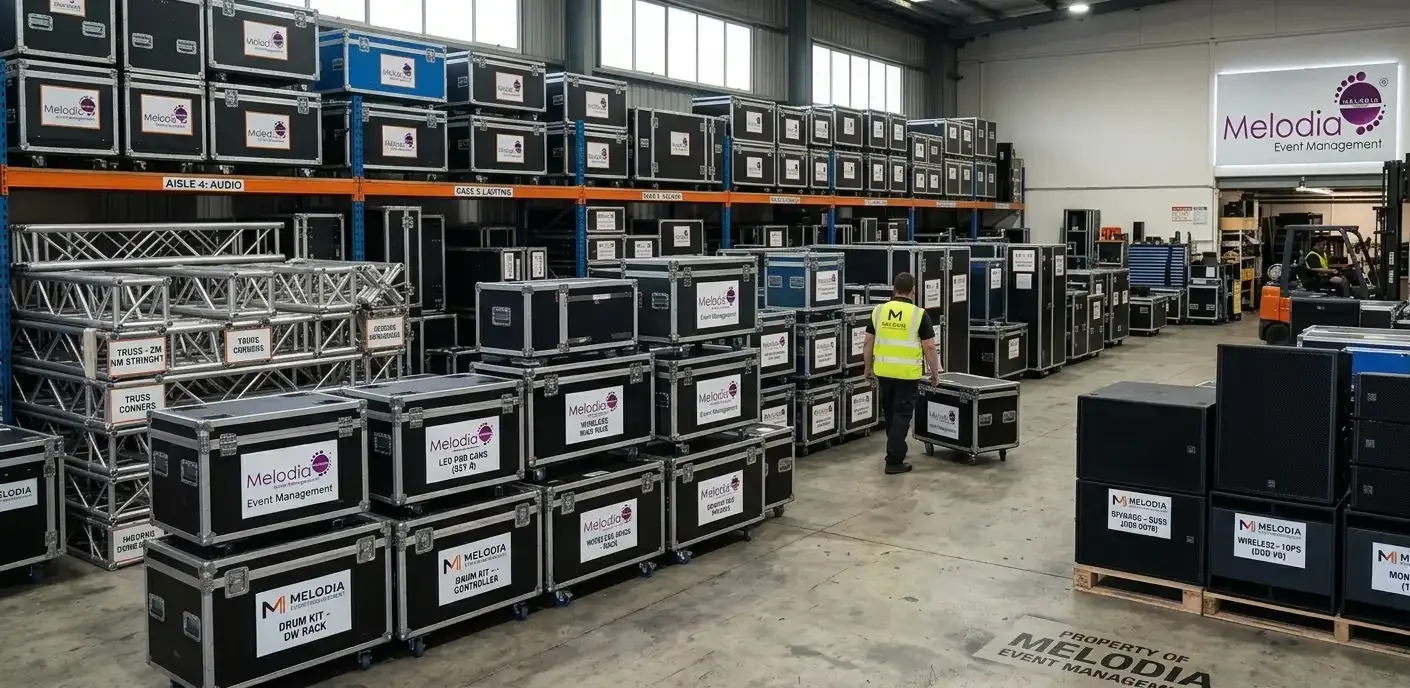
After an event at a large convention centre or auditorium, clearing out materials and cleaning up is something many teams forget.
The problem: It creates real trouble for the next company using that venue.
The solution: Close out every procedure properly and hand the venue back clean. It supports the whole event industry’s ecosystem, and it protects your own reputation too.
Tips:
- Prepare a clearance checklist before the event begins: decor, sound, lights, furniture, flex and banners, food waste, and so on.
- Assign one person to each item, with a clear time. “Everyone will take care of it” usually means no one does.
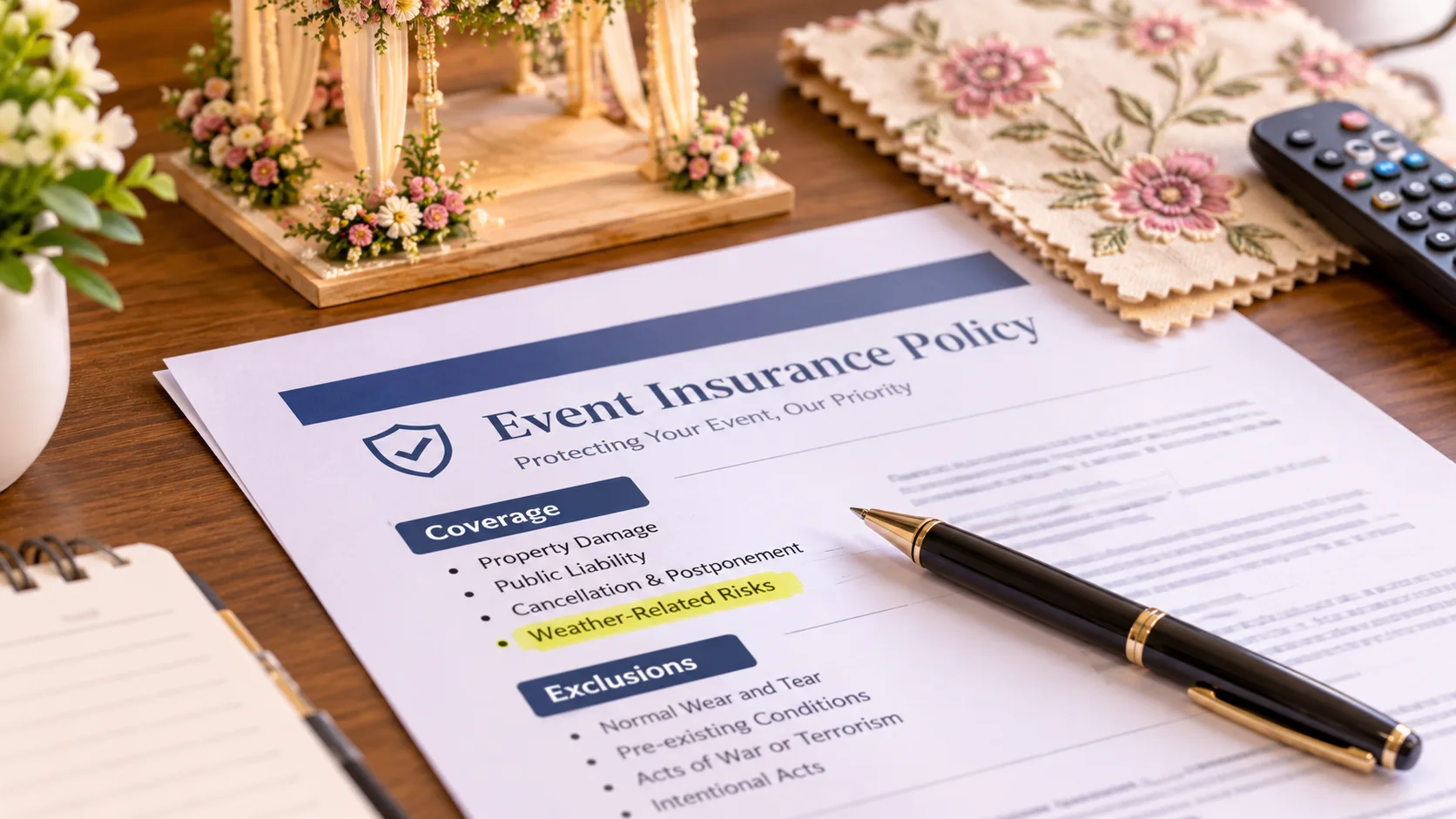
- Do a final walkthrough with the venue manager before leaving. If there’s any damage, photograph it that day so there are no disputes later. Having event insurance in place also makes damage claims much easier.
- If a security deposit is due back, get a written record of the handover.
- Reconcile the list of rented items against what was returned.
Collect Feedback (Feedback & Surveys)
Gather feedback from clients, attendees and vendors. It’s the most direct way to keep improving the quality of your events.
Tips:
- Keep it short. A survey with 5 to 8 questions gets far more responses.
- Send it within 24 to 48 hours, while the experience is still fresh. Answers are more honest that way.
- Combine a 1 to 5 rating with one open question, such as “If you could change one thing, what would it be?”
- Use a Google Form, a WhatsApp link or a QR code. Most people reply from their phones.
- For personal events like weddings, a warm phone call to the family often works better than a form. The feedback tends to be more heartfelt.
- If the feedback is positive, gently ask whether they’d be willing to leave a Google review. It adds a lot of value to your website testimonials too.
- If the feedback is negative, listen without getting defensive. It’s some of the most valuable data you’ll ever get.
Send Thank-You Notes
This is one of the most important things to do at the final stage. Send a thank-you note to the vendors, sponsors and client who worked with you. It keeps relationships strong and often leads to new references.
Tips:
- Make it personal. A line like “Anil chetta, we really noticed the care you put into the lighting” works far better than a generic “Dear all.”
- Send it within two days of the event.
- Add a photo or a short highlight video to make it special.
- For sponsors, include a brief summary of the exposure they received. It makes them far more likely to return next year.
- Don’t forget your own team. After days of hard work, a word of thanks means a lot.
Part 2: Seven Steps to a Professional Post-Event Report
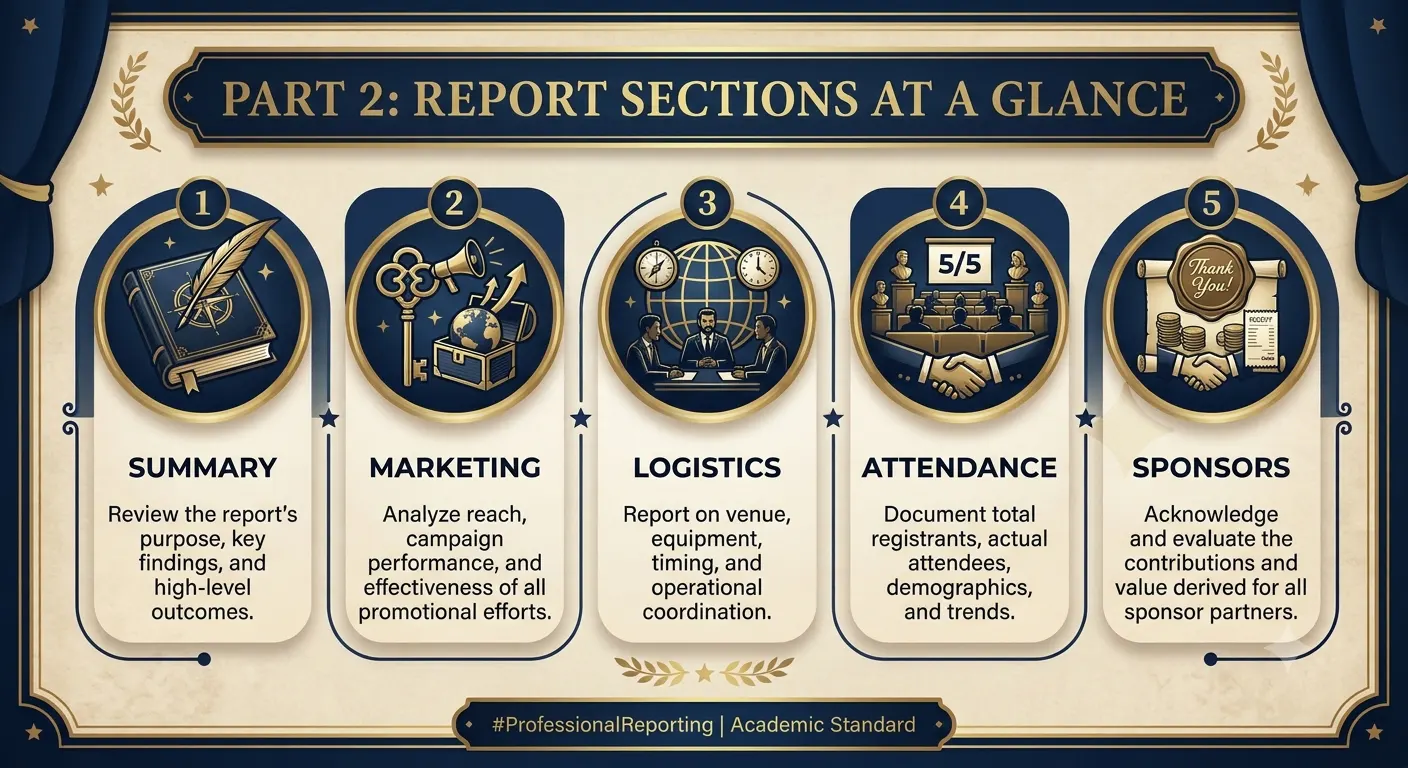
This report is your proof to the client and stakeholders that the event was a success. You can build it in seven sections.
Event Summary
Cover the main goals (KPIs), whether they were achieved, the key wins and your recommendations for the future. Keep it understandable at a glance.
Tips:
- Put a one-page summary at the very front. Even if the client reads nothing else, they’ll read this.
- Show goals and results side by side, for example “Target: 500 guests, Actual: 540.”
- Back your wins with numbers. “92% of guests rated us 4 stars or above” is much stronger than “the guests were happy.”
Marketing Efforts
Analyse what you did to bring people to the event:
- Social media campaigns and hashtag engagement
- Email marketing and paid ads
- Organic traffic from SEO
- Press releases, offers and discounts
Tips:
- Track how many registrations came from each channel. Separate tracking links (UTM links) for each channel make this easy.
- Find the channel that gave the best results and put more budget there next time. Cut spending on what didn’t work.
- Add screenshots of the reach and clicks from Instagram reels, WhatsApp broadcasts and similar channels.
- Divide your marketing spend by the number of registrations to get your cost per registration. Clients love seeing this number.
Logistics Analysis
Evaluate how the venue, transport, accommodation, staffing and Wi-Fi performed. If there were AC failures or technical glitches, record them.
Tips:
- Don’t hide problems. Write them down with the solution. “The stage mic failed for 10 minutes; we switched to the backup mic; next time we’ll start the sound check an hour earlier” reads as professionalism.
- Note the time of each issue and who handled it.
- Give the venue a small score on parking, power or generator backup, food service and restrooms. It directly helps when you choose venues in future.
- Also note things outside your control, like rain or traffic, so you can plan a backup next time.
Attendance and Registration
- Attendee numbers: the total number of people who attended.
- Attrition rate: the percentage of people who registered but didn’t show up.
- Demographics: age, gender, industry and similar details.
- Feedback data: what you learned from the post-event survey.
Tips:
- To calculate attrition: (Registered − Attended) ÷ Registered × 100. If 600 registered and 480 attended, attrition is 20%.
- If many people didn’t show, check whether you sent a reminder just before the event. A simple WhatsApp reminder can make a big difference.
- Use gate entry data to see when people arrived and when the crowd peaked. It helps you plan schedules better.
- Protect privacy. Show demographics as overall figures rather than naming individuals.
Sponsor and Exhibitor Data
Which stalls and sessions got the most visitors? How many leads did exhibitors collect, and how did they respond? Gather all of it.
Tips:
- Ask every sponsor and exhibitor for short feedback right after the event. It lays the groundwork for next year’s sponsorship deals.
- Prepare a small summary for sponsors: how many times their logo was displayed and how many people it reached.
- Compare popular sessions with the empty ones and figure out why. It will improve your next programme schedule.
Budget Breakdown
Compare the total expenses (venue rental, security, tech and so on) with the income from ticket sales and sponsorships. State clearly whether the event ended in profit or loss.
Tips:
- Show the planned budget and the actual spend side by side for each item. You’ll instantly see where you went over and where you saved.
- Explain the reason behind any overrun: last-minute changes, price rises, extra guests.
- Show amounts with and without GST separately to avoid confusion, and check the latest GST rules for event managers before you finalise your bills.
- Calculate the average cost per attendee. It’s a great reference for future quotations.
- Scan bills and invoices and keep them in the event folder.
ROI Summary
Considering revenue, brand value and new business relationships, assess how successful the event was. This also helps you decide whether to run something similar again.
Tips:
- The basic formula is (Gain − Cost) ÷ Cost × 100. If you spent ₹10 lakh and gained ₹13 lakh, your ROI is 30%.
- Also record benefits that can’t be measured in money: new client referrals, growth in social media followers, media attention, new partners.
- End the report with a clear recommendation: continue, continue with changes, or stop. It makes the client’s decision easier.
- Add an action list with an owner and a date for each item.
Five Small Things That Make Your Report Better
- Use charts and tables. A single graph explains more than ten lines of text.
- Add photos. Pictures of the event’s best moments bring the report to life.
- Keep it tight. Put the key points first and move the details to an appendix.
- Be honest. Stating problems along with their solutions builds trust.
- Send it quickly. The report should reach the client within one to two weeks of the event. The longer you wait, the less it’s worth.
Conclusion
The work isn’t finished when the event ends. But this final stage is exactly what turns an ordinary event company into a team clients can trust. A post-event report built with data, graphs and tables strengthens your client’s confidence and makes your next events even more polished.
Repeat this habit with every event, and over time you’ll build a large store of experience. That is the biggest asset any event management company can have.
Planning a modern event? Read How to Plan a Modern Event in 2026-27 for the latest trends and ideas.
❓FAQ
What is post-event analysis?
Post-event analysis is the review you do after an event ends. You look at what worked, what didn’t, how the money was spent and what the event actually delivered, so the next event can be planned better.
What is the difference between post-event analysis and a post-event report?
Analysis is the work of reviewing and understanding the event. The report is the document that presents your findings to the client or stakeholders. You do the analysis first, then build the report from it.
When should we start the post-event analysis?
Start right away. Write your notes and hold the team debrief within a few days of the event, while everyone still remembers the details. Send the feedback survey within 24 to 48 hours.
How soon should the post-event report reach the client?
Ideally within one to two weeks of the event. The longer you wait, the less useful the report becomes.
What should a post-event report include?
A good report has seven parts: event summary, marketing efforts, logistics analysis, attendance and registration, sponsor and exhibitor data, budget breakdown and ROI summary. Charts, tables and a few event photos make it easier to read.
How do we calculate event ROI?
Use this formula: ROI = (Gain − Cost) ÷ Cost × 100. For example, if you spent ₹10 lakh and the event brought in ₹13 lakh in financial return directly attributable to it, your net gain is ₹3 lakh and your ROI is 30%.
Should brand visibility and social media growth be counted in ROI?
No. Keep the financial ROI figure for money only. Report brand visibility, follower growth, referrals and media attention separately as non-financial benefits.
How do we calculate the attrition rate?
Attrition rate = (Registered − Attended) ÷ Registered × 100. If 600 people registered and 480 attended, the attrition rate is 20%. Count only unique registrations, and report walk-ins and cancellations separately so the number stays honest.
How long should a feedback survey be?
Keep it to 5 to 8 questions. Combine a 1 to 5 rating with one open question, such as “If you could change one thing, what would it be?” For weddings and other personal events, a warm phone call to the family often works better than a form.
Why is the internal team debrief important?
Your team and vendors saw different parts of the event, and the debrief brings those views together. Ask what went well, what was delayed, how the vendors performed, where communication broke down and what to improve. Give every improvement an owner and a date.
How do we know which marketing channel worked best?
Use separate tracking links (UTM links) for each channel, and look at actual attendees as well as registrations. A channel with many sign-ups but few attendees isn’t performing as well as it looks. Dividing your spend by registrations and by attendees gives you the cost per registration and cost per attendee.
Why does venue cleanup matter after an event?
If you leave materials behind, it causes real trouble for the next company using the venue. Handing it back clean also protects your own reputation. Do a final walkthrough with the venue manager, photograph any damage that day and get a written record of the handover.
Do we really need to send thank-you notes?
Yes. A personal note to your vendors, sponsors, client and team keeps relationships strong and often leads to new references. Send it within two days, and for sponsors, include a short summary of the exposure they received.