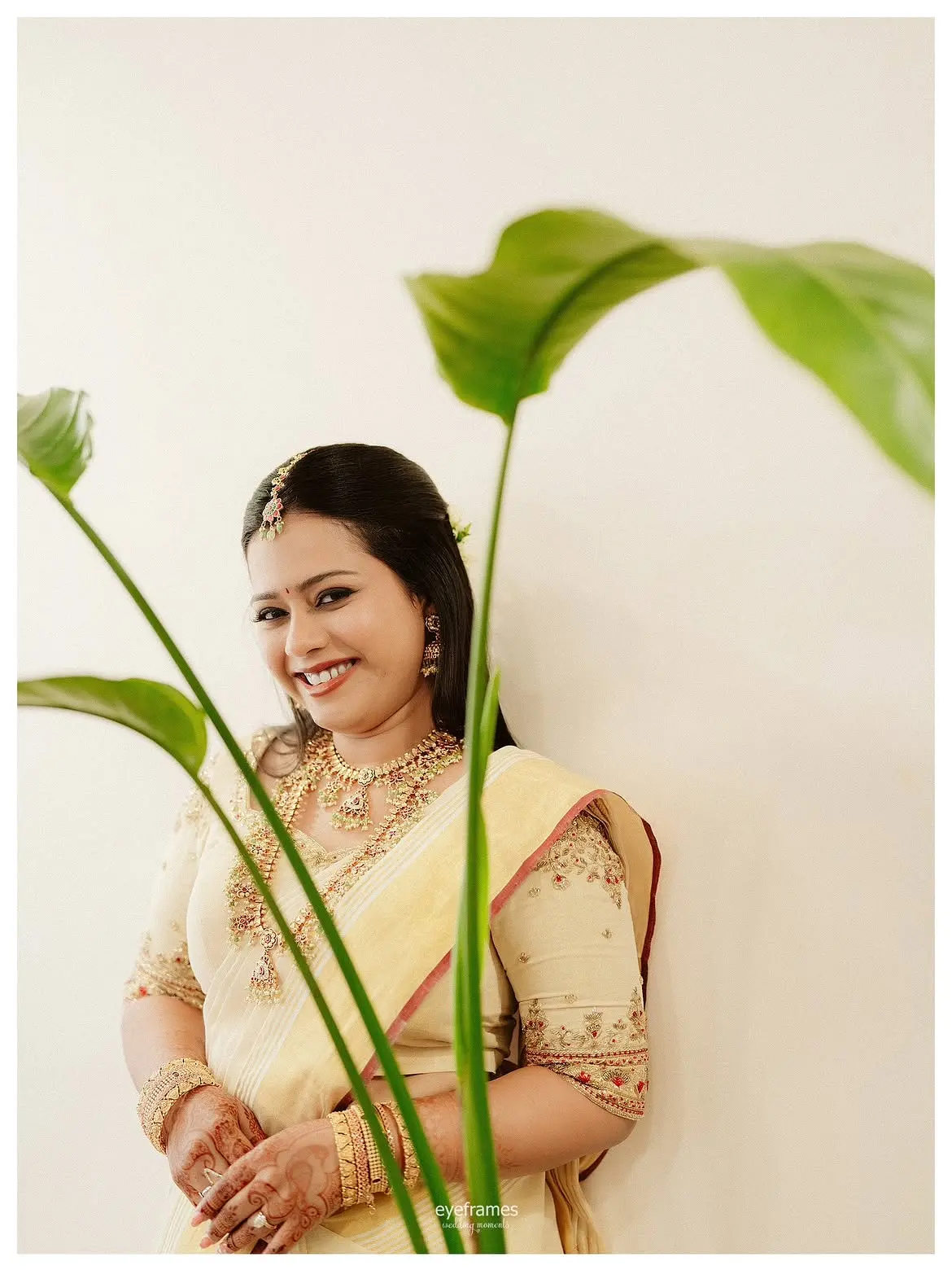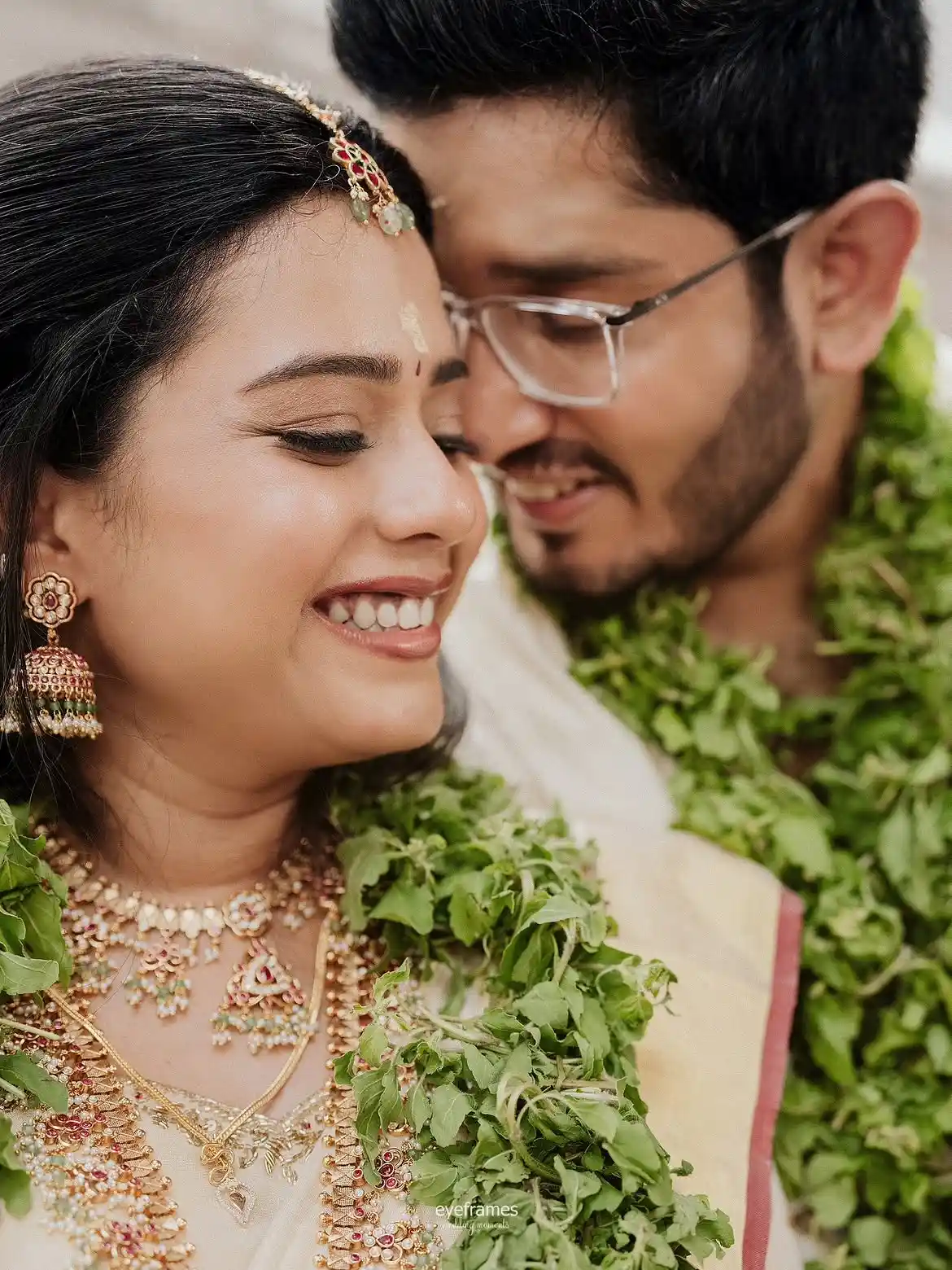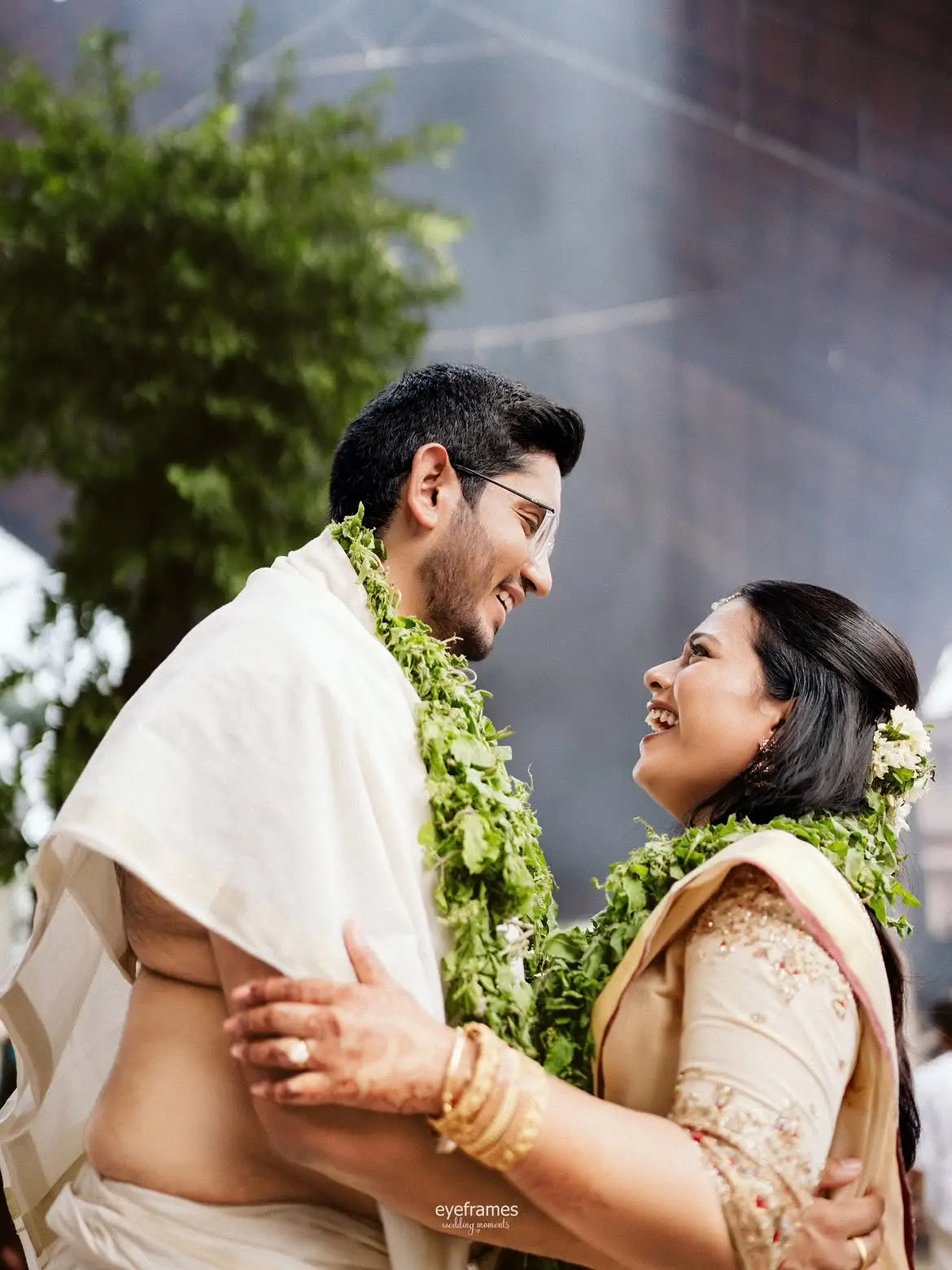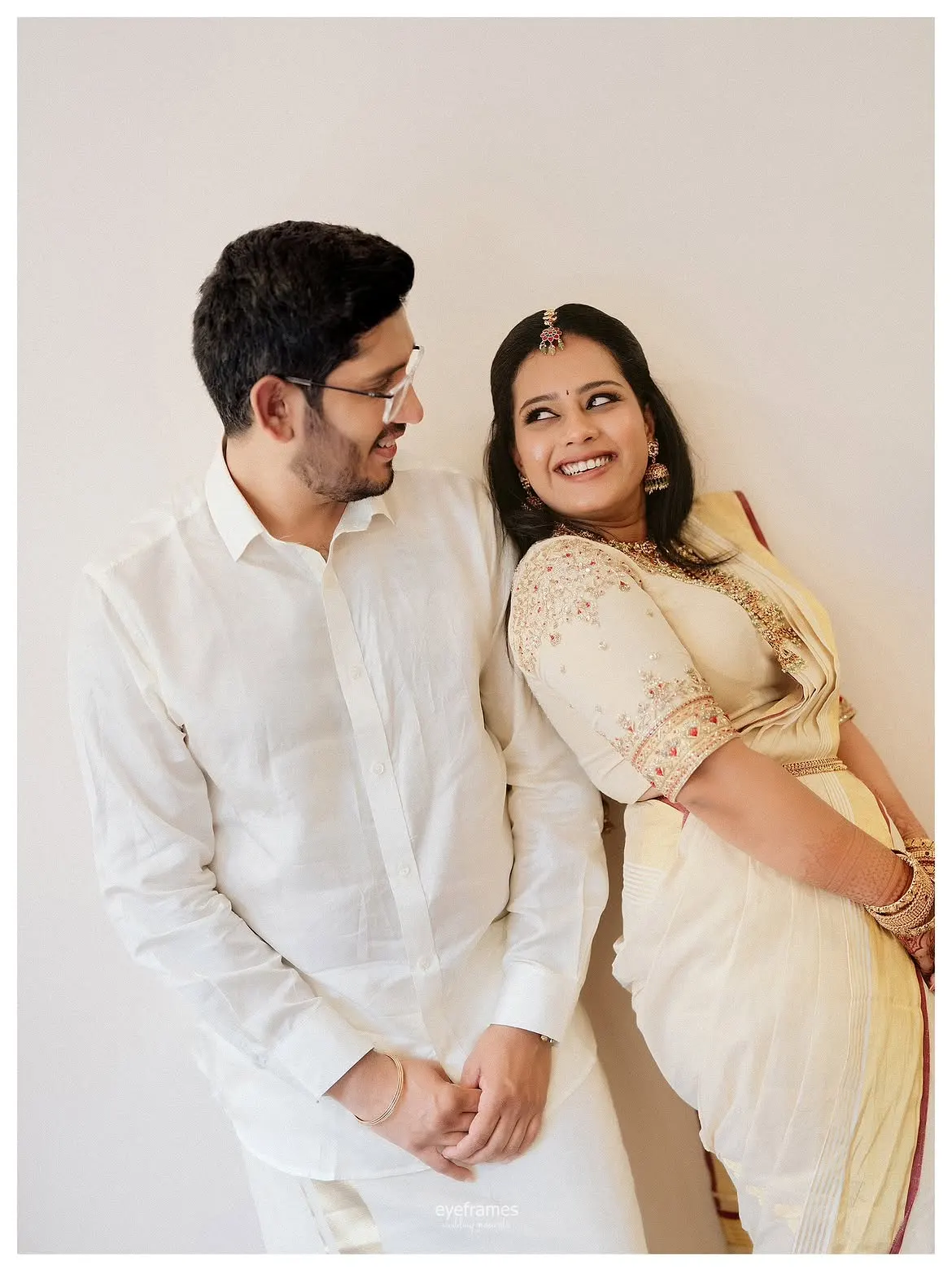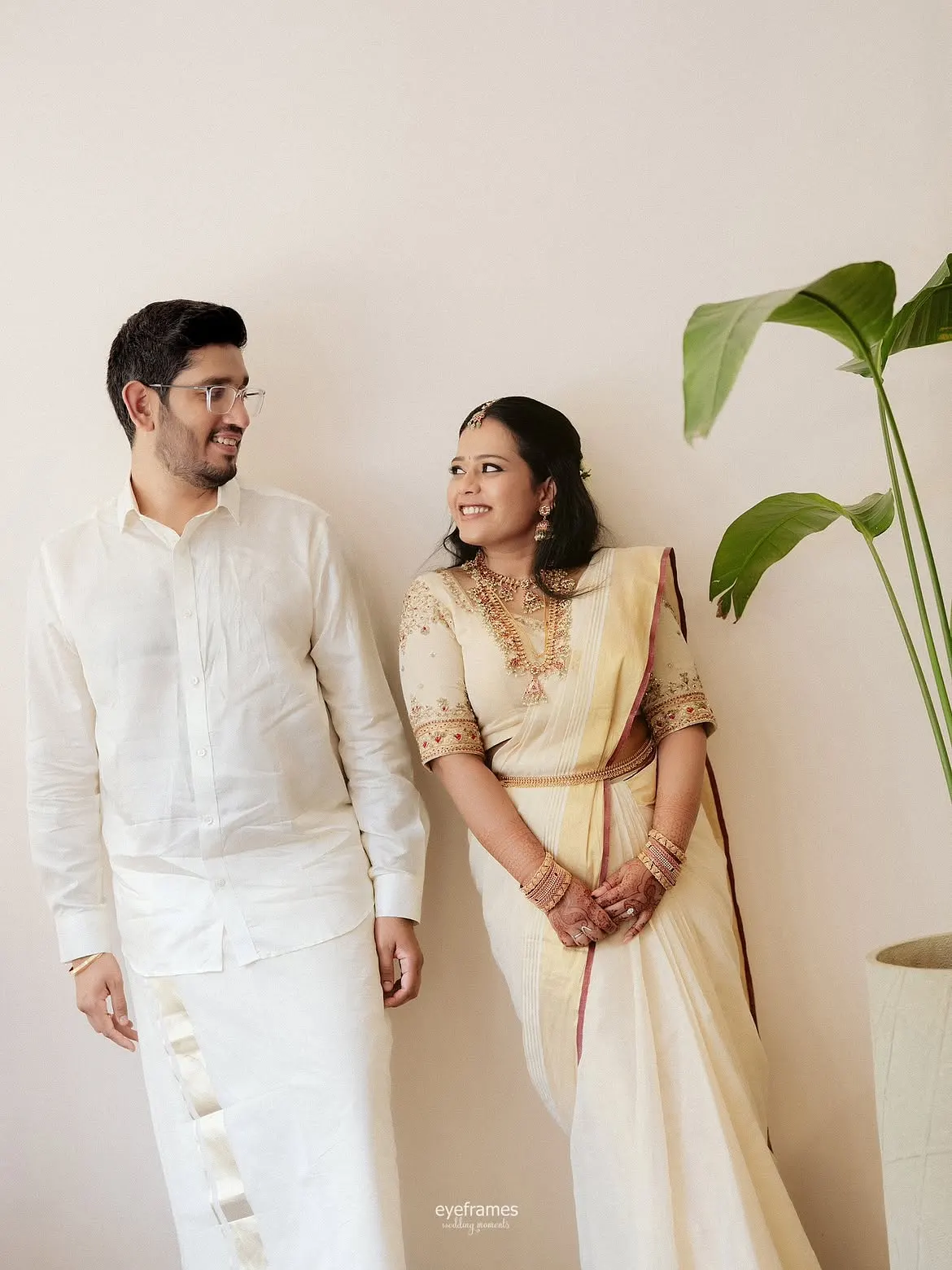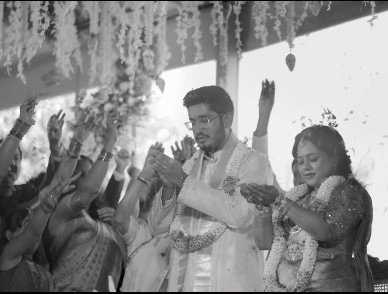
Shriya and Abhinav’s wedding came with three big questions: how to honour a Christian and a Hindu tradition in one wedding, how to keep an outdoor ceremony safe, and how to run three days of celebration across Thrissur and Kochi. Here is how Melodia Event Management answered each one.
Behind every wedding of this size is a chart that both families have agreed on. For Shriya and Abhinav, it covered a sangeet night, a mehendi morning, a Hindu muhurtham and a Christian reception ceremony, from the first sound check at Neelambari to the last guest leaving Ramada. Here is how the three days unfolded.
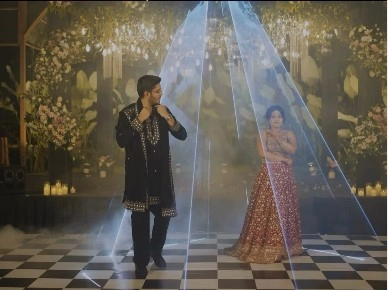
Family performances from both sides, couple games and the couple’s grand dance filled an evening at Neelambari’s Jaalam for about 100 guests.
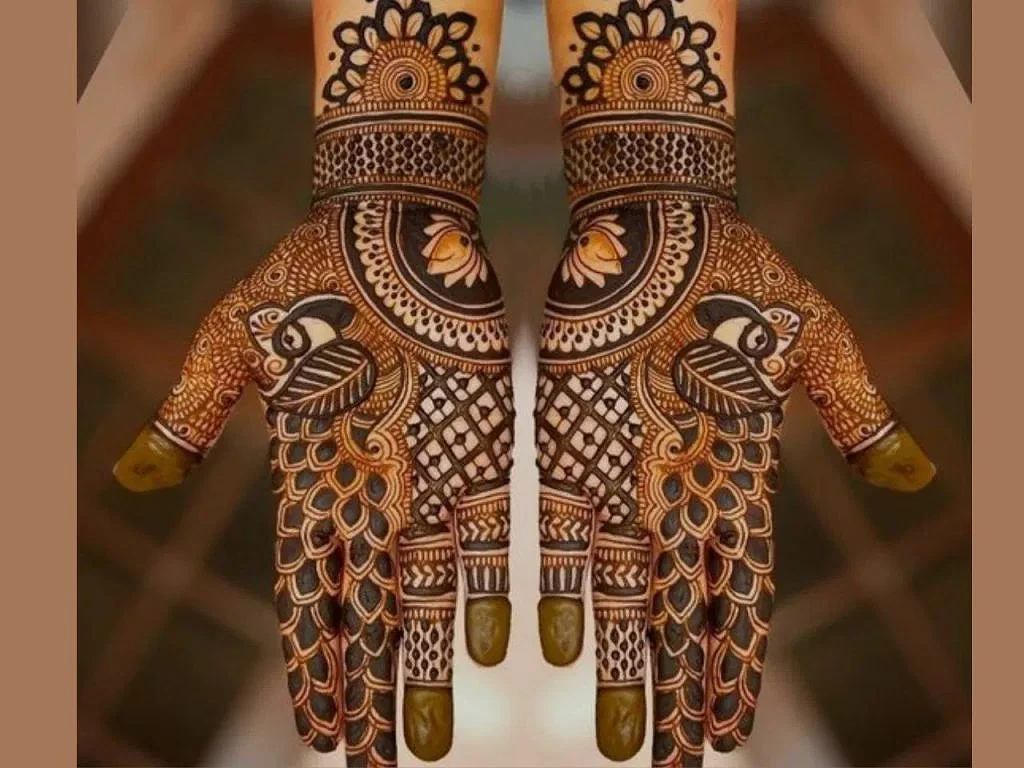
A relaxed, floral-themed morning at the Koothambalam, with bridal and family mehendi and candid photography for 30 close guests.
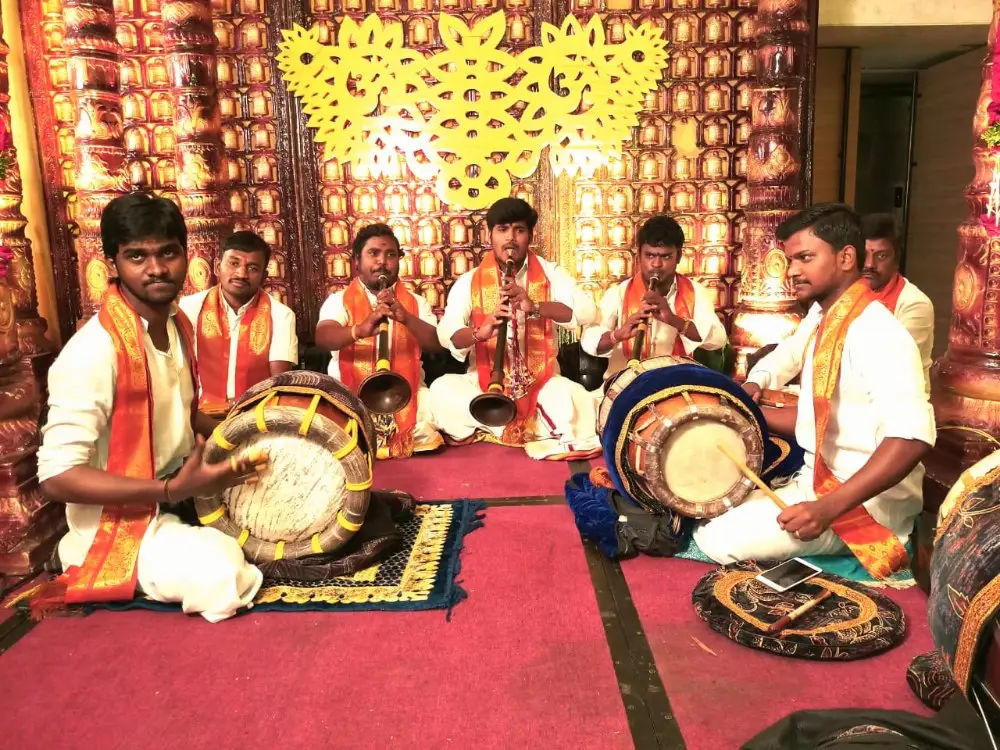
Nadaswaram music accompanied the grand entries and set a traditional tone for the wedding morning.
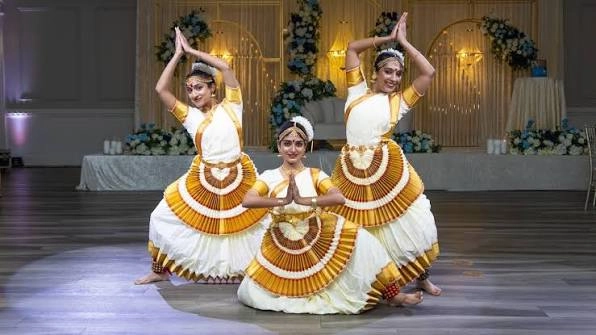
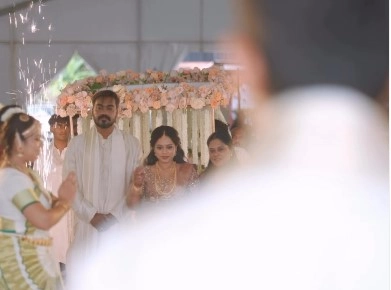
A Mohiniyattam performance added classical grace to the muhurtham under the German tent.
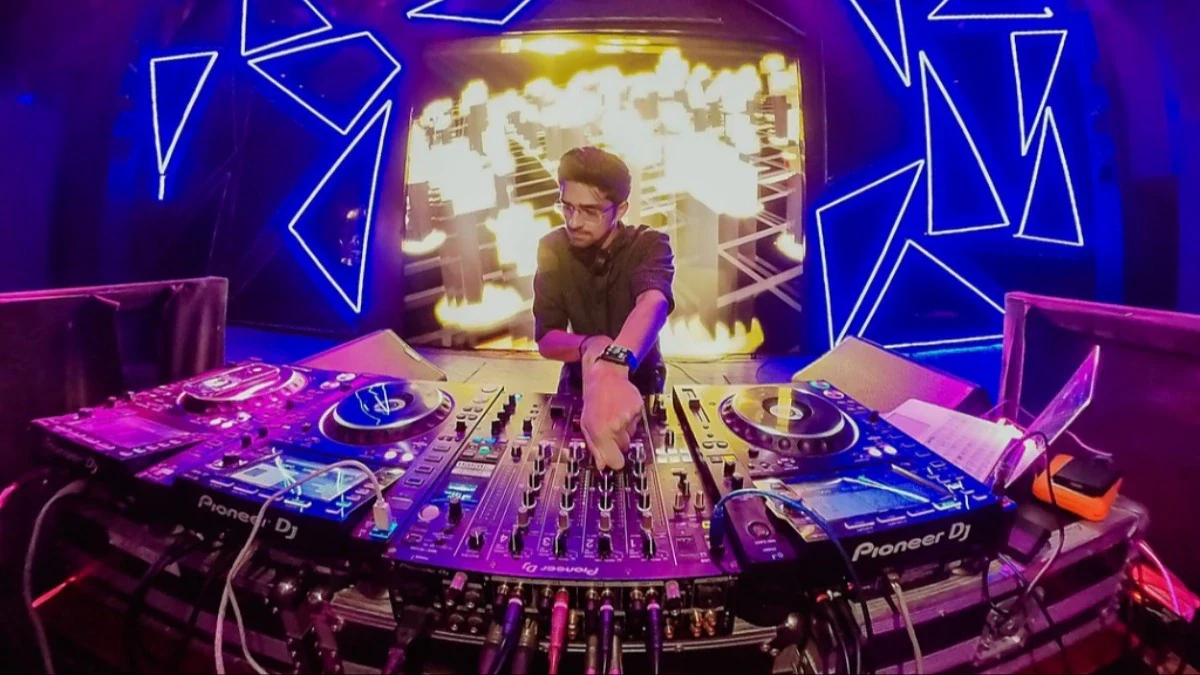
After the grand dance, a DJ opened the dance floor, and guests from both families danced together as dinner began.
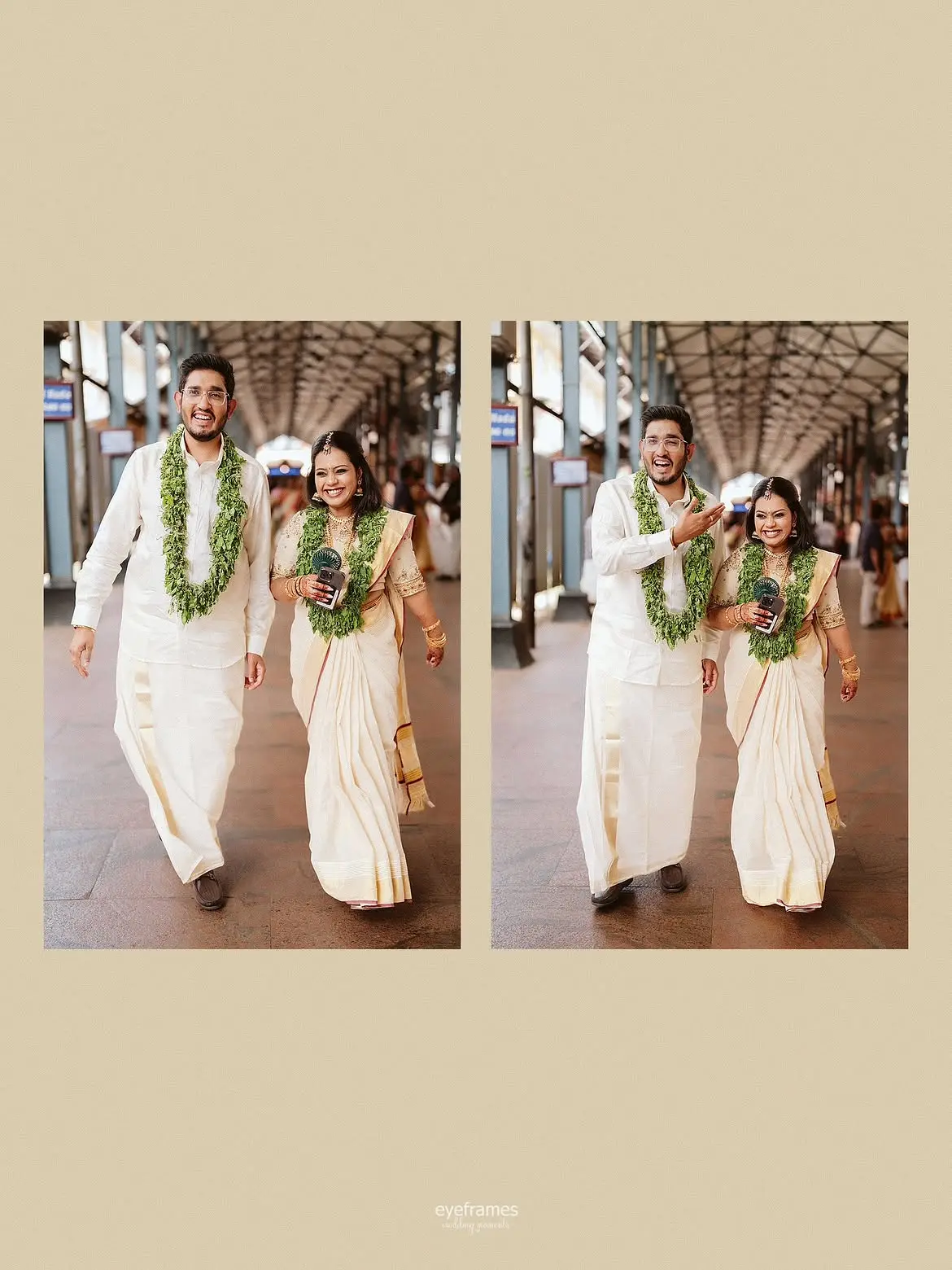
When a wedding brings two traditions together, the biggest risk is not a missing detail but a misunderstanding. For Shriya and Abhinav, we sat down with both families before booking anything, discussed every ritual, entry and venue, and built one chart for all three days. We left half an hour between the Hindu muhurtham, which ended at 10:30 AM, and the reception welcome at 11:00 AM, so the Christian ceremony could start on time and neither family felt rushed.
"Honestly, we were a bit nervous in the beginning. Our families come from two different traditions, and all we wanted was for everyone to feel respected. The Melodia team sat down with both sides, really listened, and planned all three days around us. From the Sangeet to the muhurtham to the reception, nothing felt rushed, and nobody felt left out. When both our families went home smiling, that was the best thing we could have asked for."
When two traditions share one wedding, the best planning is the kind both families can recognize themselves in.
Whether it’s one day or three, one tradition or two, tell us your dates, venues and guest count. We’ll sit down with both families and build a plan that gives every ritual its place.